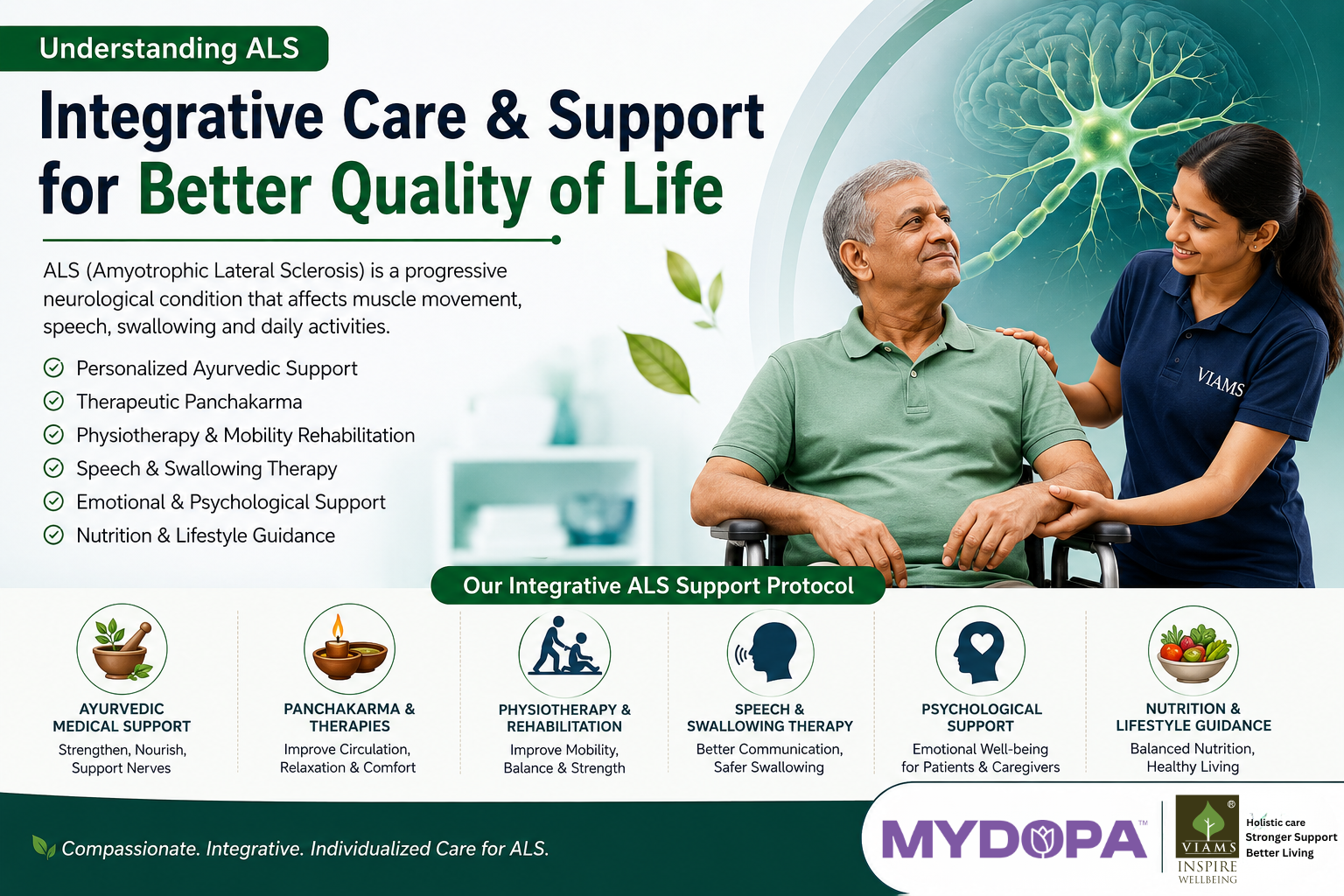
Amyotrophic Lateral Sclerosis (ALS), also known as Motor Neuron Disease (MND), is a progressive neurological disorder that affects the nerve cells responsible for controlling voluntary muscle movements. ALS Treatment in India focuses on improving quality of life through integrative neurological care, rehabilitation support, physiotherapy, and personalized therapies. Activities such as walking, speaking, swallowing, and breathing gradually become difficult as the disease progresses.
For patients and families, receiving an ALS diagnosis can be emotionally overwhelming. Along with physical challenges, many individuals experience uncertainty, stress, and concerns about long-term care. While modern medicine currently focuses mainly on symptom management, integrative neurological care approaches are increasingly being explored to improve quality of life, mobility, emotional well-being, and rehabilitation support.
At VIAMS, patients receive structured integrative neurological care designed to support individuals living with ALS and other neurodegenerative conditions through personalized Ayurvedic treatment, rehabilitation therapies, and multidisciplinary clinical guidance.
ALS is a neurodegenerative disease that progressively damages motor neurons — the specialized nerve cells that control voluntary muscle movement. As these neurons deteriorate, muscles gradually weaken and lose function over time.
ALS can affect:
The progression rate varies from person to person. Some individuals experience slow progression, while others may notice rapid decline in physical function.
Early symptoms of ALS are often subtle and may initially resemble common muscular, orthopedic, or age-related issues.
Common early symptoms include:
As ALS progresses, patients may develop:
Early diagnosis and supportive care are important for improving long-term quality of life and maintaining independence for as long as possible.
The exact cause of ALS remains unclear in many patients. However, research suggests that multiple factors may contribute to the condition.
In India, awareness regarding ALS is still growing, which sometimes leads to delayed diagnosis and rehabilitation support.
There is currently no single test that definitively confirms ALS. Diagnosis is typically based on a combination of clinical evaluation and neurological investigations.
Common diagnostic procedures include:
Many patients consult multiple specialists before receiving a confirmed diagnosis, which can be emotionally exhausting for both patients and caregivers.
ALS affects not only the patient but also the entire family system.
This is why multidisciplinary and structured care becomes extremely important in ALS management.
Although there is currently no complete cure for ALS, integrative treatment approaches may help improve overall well-being, functional ability, mobility support, and patient comfort.
At the VIAMS Neurology Department, ALS care follows a multidisciplinary integrative neurological model that combines supportive therapies under professional supervision.
Ayurveda considers neurodegenerative disorders as systemic imbalances affecting the nervous system, muscles, metabolism, and vitality.
Customized Ayurvedic formulations may help support:
Treatment plans are personalized based on the patient’s condition, disease stage, and overall health profile.
Selected Ayurvedic therapies may help improve circulation, flexibility, relaxation, and physical comfort.
Depending on patient suitability, therapies may include:
These therapies are planned carefully according to individual tolerance and medical supervision.
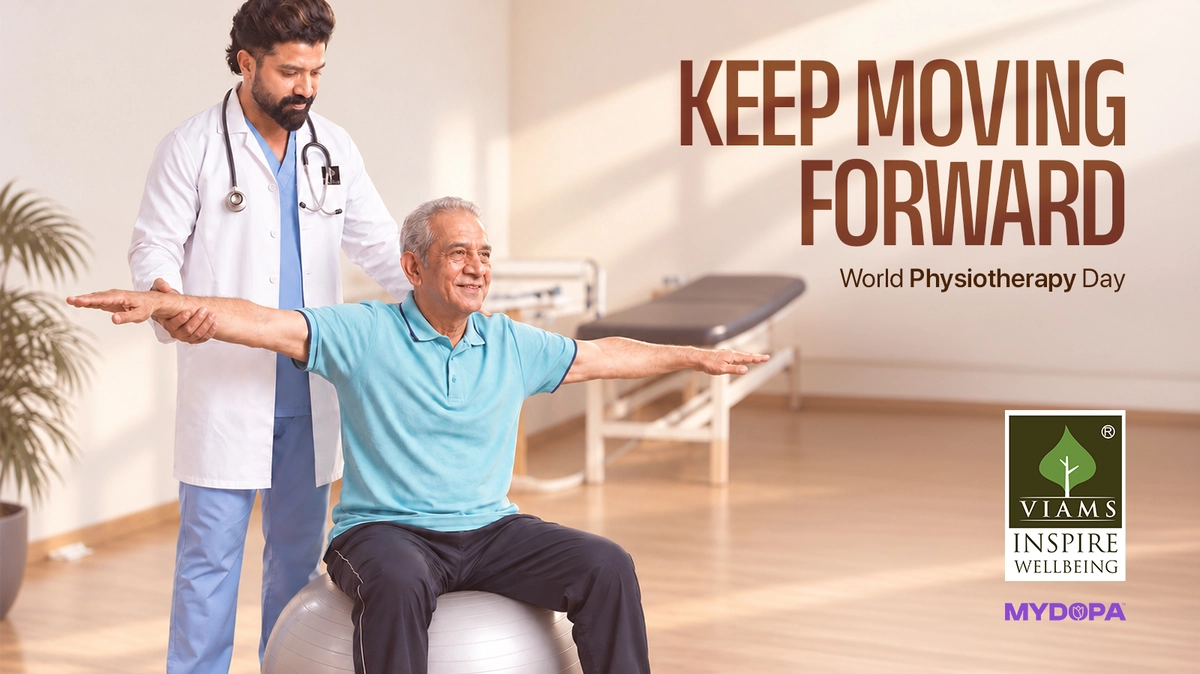
Physiotherapy plays an important role in maintaining mobility and functional independence in ALS patients.
Rehabilitation support may focus on:
Regular guided movement can help reduce stiffness and improve confidence in daily activities.
Speech and swallowing difficulties are common in ALS progression.
Speech-language therapy may help patients:
Early intervention often provides better long-term support.
Living with ALS can create emotional and psychological challenges for both patients and caregivers.
Common emotional concerns include:
Psychological counselling and emotional support programs help families cope more effectively with long-term neurological illness.
ALS management extends beyond medications alone. A comprehensive treatment model involving multiple specialists often provides more effective support.
At VIAMS, the integrative neurological care approach combines:
This collaborative approach helps address physical, emotional, and functional aspects of the condition together.
Although more common after middle age, ALS can also occur in younger adults.
While there is no definitive cure, supportive treatment, rehabilitation, nutrition, and integrative care may improve quality of life significantly.
Properly supervised physiotherapy is often beneficial in maintaining flexibility, balance, and mobility.
ALS can also impact communication, breathing, emotional health, and social functioning.
Consistent neurological supervision helps manage symptoms more effectively.
Good nutrition is essential for maintaining strength and energy.
Breathing exercises and respiratory monitoring become increasingly important in advanced stages.
Gentle supervised movement may help preserve function longer.
Mental health care is important for both patients and caregivers.
Structured rehabilitation and caregiving guidance help families manage the condition more effectively.
Consult a neurological specialist if you notice:
Early intervention can help improve rehabilitation planning and supportive care outcomes.
Currently, there is no complete cure for ALS. However, supportive and integrative treatment approaches may help improve quality of life and functional ability.
ALS is the most common form of Motor Neuron Disease (MND), and the terms are often used interchangeably.
Ayurvedic supportive care may help improve comfort, mobility support, sleep, digestion, and overall well-being when integrated responsibly under medical supervision.
Yes. Supervised physiotherapy may help maintain posture, flexibility, balance, and functional mobility.
Yes. Many ALS patients develop speech and swallowing difficulties that may require speech-language therapy support.
VIAMS follows an integrative neurological care model that combines Ayurvedic treatment protocols, Panchakarma therapies, physiotherapy, speech therapy, rehabilitation support, psychological counselling, and personalized care guidance.
Early intervention is generally beneficial because it allows patients to begin rehabilitation, supportive care, and symptom management sooner.
Living with ALS can be physically and emotionally challenging, but structured rehabilitation, multidisciplinary support, and integrative neurological care can make a meaningful difference in the lives of patients and caregivers.
At VIAMS, the focus is on providing compassionate, personalized neurological support through integrative treatment planning and long-term rehabilitation guidance.
If you or a loved one is experiencing symptoms of ALS or requires expert neurological support, connect with the specialists at VIAMS to explore personalized care options and rehabilitation guidance.