
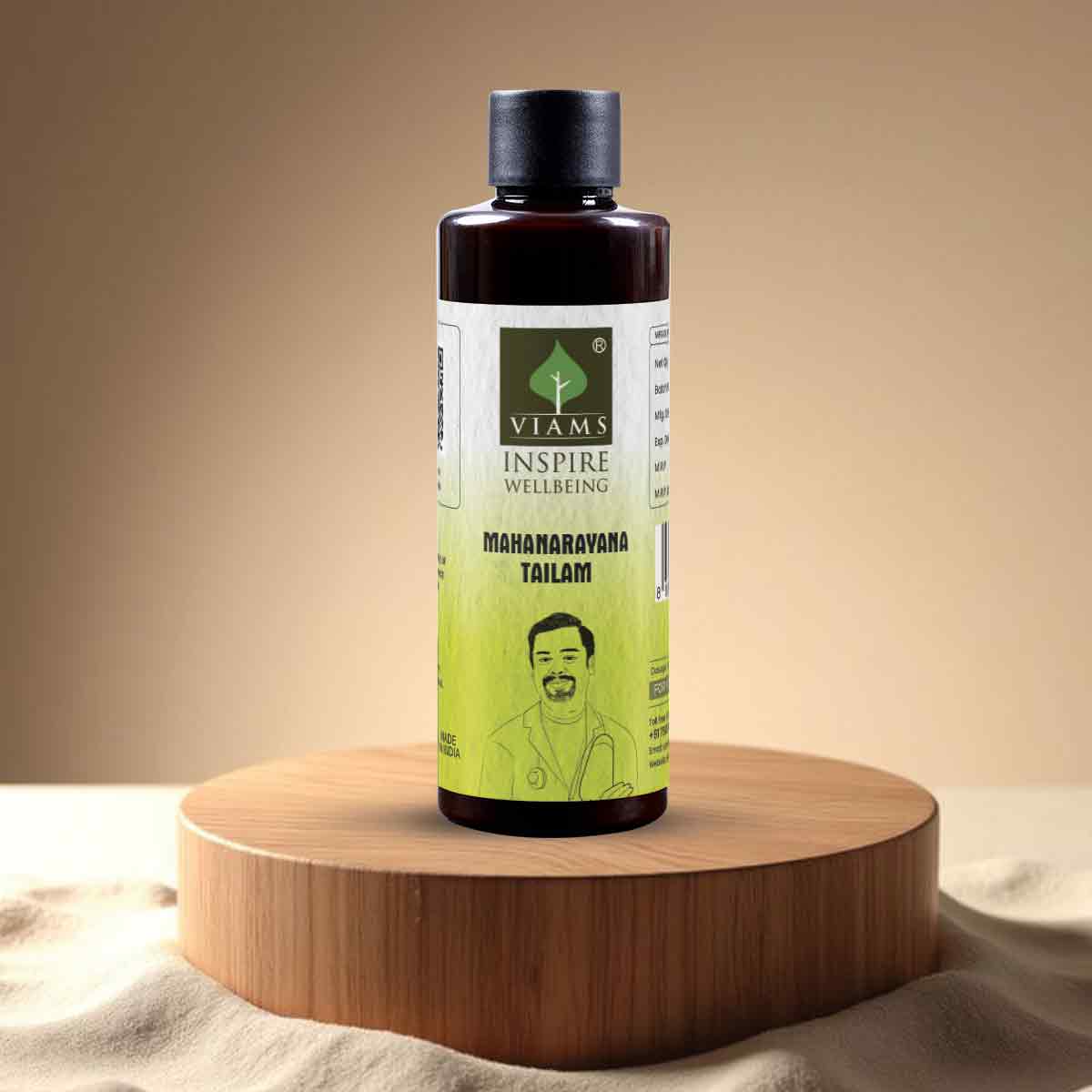
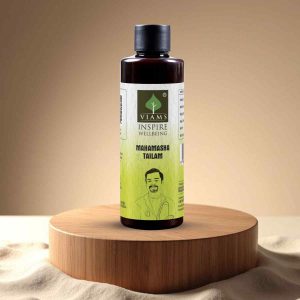
Mahanarayana Thailam
₹280.00
Mahanarayana Thailam is a classical, milk-processed Ayurvedic medicated oil formulated to nourish nerves and muscles, pacify Vāta, and relieve chronic joint and muscle pain. Widely used in therapeutic massage and as part of Panchakarma procedures, it supports improved flexibility, muscle strength, and recovery after injury.
- 100% Pure Ayurveda
- Easy Returns
- Pay Online
- All-India Free Shipping
Description
Mahanarayana Thailam is a time-honoured Sneha preparation in Ayurvedic medicine: a medicated oil processed with milk that combines rejuvenative (rasāyana), nervine (balya) and Vāta-pacifying actions. It is indicated for degenerative and chronic Vāta conditions affecting muscles, joints and nerves — for example osteo-arthritic pain, chronic low-back pain, sciatica, neuralgia and post-traumatic stiffness. In clinical practice the oil is used for abhyānga (therapeutic massage), as an anuvasana component in basti therapies, and as an adjuvant in rehabilitative protocols to improve tissue nutrition, reduce pain and enhance mobility.
Classical rationale & key actions
The preparation employs milk (kṣīra) in its Sneha-kalpana to transfer both water- and lipid-soluble phytochemicals into the oil vehicle, producing a product with deep-tissue nourishing and calming attributes. The combined pharmacology (nutritive, anti-spasmodic, analgesic and mild anti-inflammatory) is consistent with its traditional role as a strengthening and rejuvenating oil for neuromuscular disorders.
Typical composition (representative ingredients)
Classical and commercially produced versions contain a rich polyherbal payload — commonly including Bala (Sida cordifolia), Shatavari (Asparagus racemosus), Ashwagandha (Withania somnifera), Devadaru (Cedrus deodara), Kustha/Saussurea, Rasana (Alpinia galanga) and specified supporting herbs — that are processed with milk and a base oil (typically sesame). The exact ingredient list and relative proportions vary by classical textual variant and manufacturer, but all follow Sneha-kalpana principles to ensure transfer of active constituents into the oil medium.
Indications & clinical uses
- Chronic Vāta disorders: osteoarthritis, spondylosis, degenerative joint disease.
- Neuropathic/myofascial pain: sciatica, neuralgias, chronic muscle stiffness.
- Post-injury and post-operative rehabilitation as an adjunct to physiotherapy and local care.
- Therapeutic procedures: abhyānga (massage), anuvasana basti (oil enema) in physician-supervised Panchakarma protocols.
Mode of application & practical guidance
For external use only. Warm the oil mildly (do not overheat) and apply with a gentle to medium therapeutic massage targeted to affected areas for 10–30 minutes, followed by light fomentation if prescribed. When used in anuvasana basti or other internal therapeutic procedures, follow established practitioner protocols. Adjust frequency and duration according to patient age, condition severity and clinical response.
Safety, contraindications & precautions
- External application only unless used internally under qualified supervision as part of classical procedures.
- Avoid contact with eyes and mucous membranes. Patch-test on sensitive skin before wider use.
- Use caution in infants, neonates and sensitive elderly patients; seek specialist guidance for pediatric or pregnant patients.
- Discontinue if significant irritation, burning or allergic dermatitis occurs. For deep or infected wounds and serious fractures, use only as an adjunct under appropriate medical/orthopaedic care.
Evidence & modern research highlights
Analytical and experimental studies report antioxidant activity and identifiable phytochemical fingerprints in Mahanarayana samples, supporting the traditional claims of tissue protection and anti-oxidative potential. Comparative product analyses emphasise the importance of low acid values and miscible active components for topical efficacy. While empirical and institutional clinical reports indicate symptomatic benefit in Vāta disorders and specific clinical applications (e.g., basti procedures), more high-quality randomized clinical trials would strengthen the evidence base. Until then, integrate the oil into multimodal clinical protocols and monitor outcomes.
Clinical note (for hospital/clinic pages)
Mahanarayana Thailam performs best when used within an individualized treatment plan — therapeutic abhyānga, specified Panchakarma procedures, targeted internal medicines and rehabilitative physiotherapy — all selected according to the patient’s prakṛti, vikṛti and therapeutic goals. Document response, adjust local protocols and prioritise products with validated standardisation for safety and reproducible outcomes.
Each 10 ml is prepared out of
| Sanskrit Name | Botanical Name | Qty |
| Taila | Sesame Oil | 10 ml |
| Vilva | Aegle marmelos | 0.778 g |
| Asvagandha | Withania somnifera | 0.778 g |
| Brihati | Solanum anguivi | 0.778 g |
| Svadamshtra | Tribulus terrestris | 0.778 g |
| Syonaka | Oroxylum indicum | 0.778 g |
| Vatyalaka | Sida cordifolia | 0.778 g |
| Paribhadra | Erythrina variegata | 0.778 g |
| Kathilla | Boerhavia diffusa | 0.778 g |
| Ksudra | Solanum virginianum | 0.778 g |
| Atibala | Abutilon indicum | 0.778 g |
| Agnimantha | Premna corymbosa | 0.778 g |
| Sarani | Merremia tridentata | 0.778 g |
| PataIi | Stereosprmum colais | 0.778 g |
| Ajadugdha | Goat’s milk | 10.00 ml |
| Satavari | Asparagus recemosus | 10.00 ml |
| Rasna | Alpinia galanga | 0.019 g |
| Asvagandha | Withania somnifera | 0.019 g |
| Misi | Anethum gavaeolens | 0.019 g |
| Daru | Cedrus deodara | 0.019 g |
| Prisniparni | Desmodium gangeticum | 0.019 g |
| Salaparni | Pseudarthria viscida | 0.019 g |
| Mashaparni | Vigna radiata var. sublobata | 0.019 g |
| Mudgaparni | Dysolobium pilosum | 0.019 g |
| Kesara | Mesua ferrea | 0.019 g |
| Sindhuttha | Rock salt | 0.019 g |
| Rajani | Curcuma longa | 0.019 g |
| Darvi | Berberis aristata | 0.019 g |
| Saileva | Parmelia perlata | 0.019 q |
| Pushkara | lnula racemosa | 0.019 g |
| Ela | Elettaria cardamomum | 0.019 g |
| Ugra | Acorus calamus | 0.019 g |
| Yashti | Glycyrrhiza glabra | 0.019 g |
| Tagara | Valeriano jatamansi | 0.019 g |
| Abdo | Cyperus rotundus | 0.019 g |
| Ambu | Plectranthus vettiveroides | 0.019 g |
| Potra | Cinnamomum tamala | 0.019 g |
| Bringa | Eclipta alba | 0.019 g |
| Kakolidvaya | Withania somnifera (sub.) | 0.038 g |
| Dvimeda | Asparagus racemosus (sub.) | 0.038 g |
| Jivakadvaya | Pueraria tuberosa (sub.) | 0.038 g |
| Ridhidvaya | Curculigo orchioides (sub.) | 0.038 g |
| Vacha | Acorus calamus | 0.019 g |
| Palasa | Butea monosperma | 0.019 g |
| Sthauneya | Saussurea costus (sub.) | 0.019 g |
| Vrischika | Boerhavia verticillata | 0.019 g |
| Karpura | Dryobalanops aromatica | 0.019 g |
| Kasmira | Crocus sativus | 0.019 g |
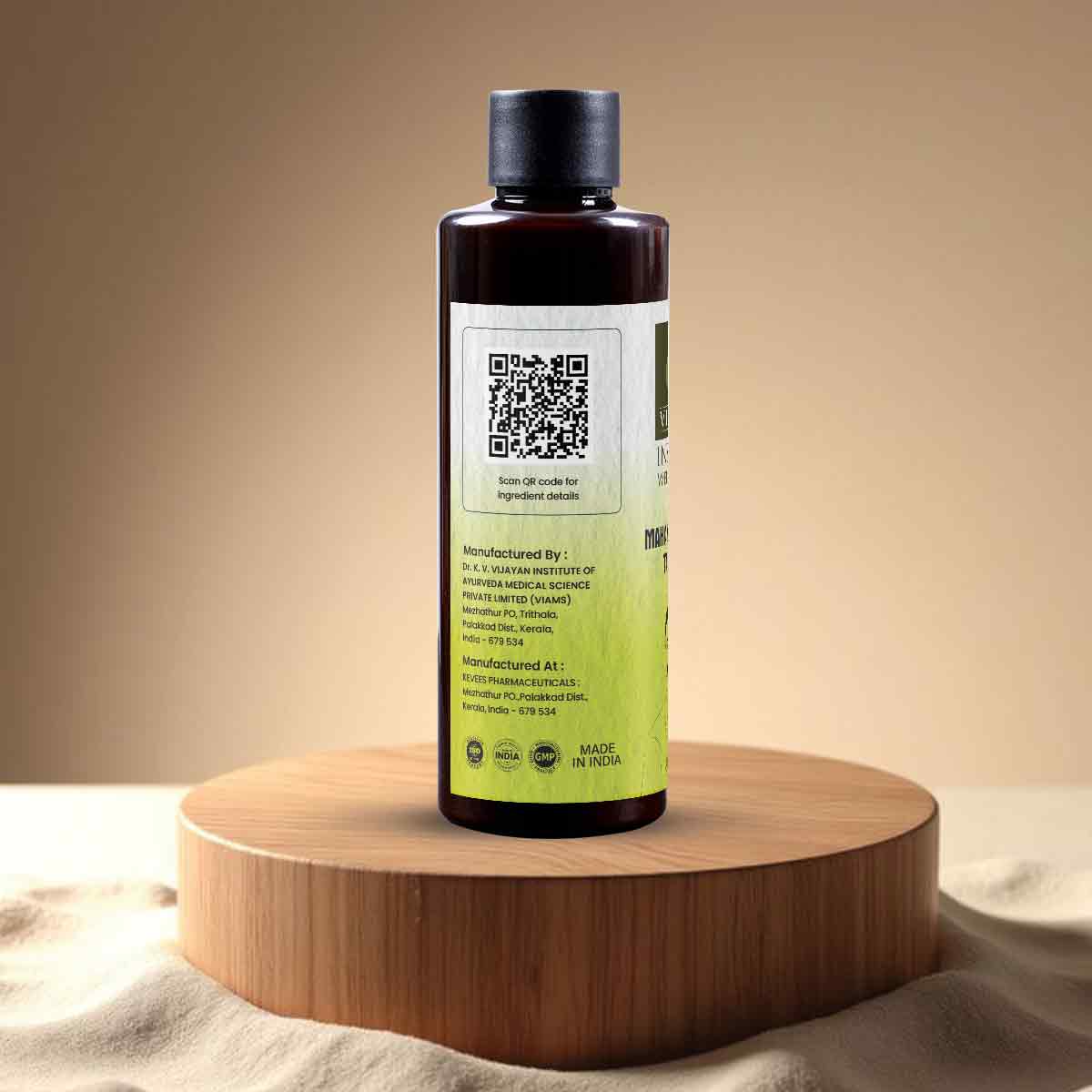
Manufactured & Marketed by
Dr. K. V. VIJAYAN INSTITUTE OF AYURVEDA
MEDICAL SCIENCE PRIVATE LIMITED (VIAMS)
MEZHATHUR PO, TRITHALA, PALAKKAD DIST
KERALA, INDIA – 679 534
Manufactured at
KEVEES PHARMACEUTICALS
MEZHATHUR PO., PALAKKAD DT.
KERALA, INDIA – 679 534
An GMP certified company
Net content/Packing: 200 ml pet bottle
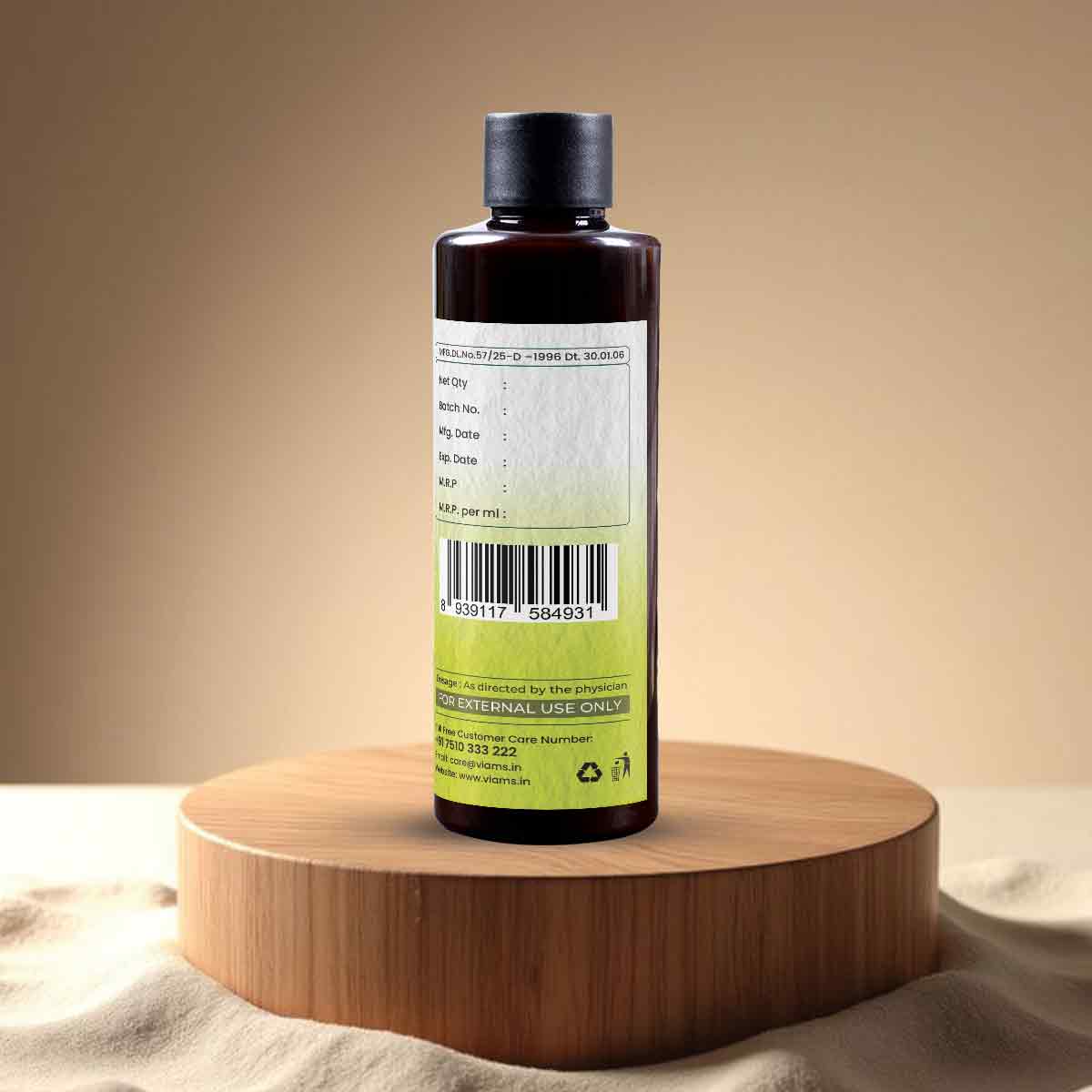
Usage: For External application only
Dosage: As directed by the Physician
Customer Care
Call/WhatsApp: +91 7034 99 2442
Customer Care Toll Free Number: +91 7510 333 222
Email: [email protected]
Expiry Date: 36 Months from the Date of Manufacturing.
Be the first to review “Mahanarayana Thailam” Cancel reply
Reviews
There are no reviews yet.