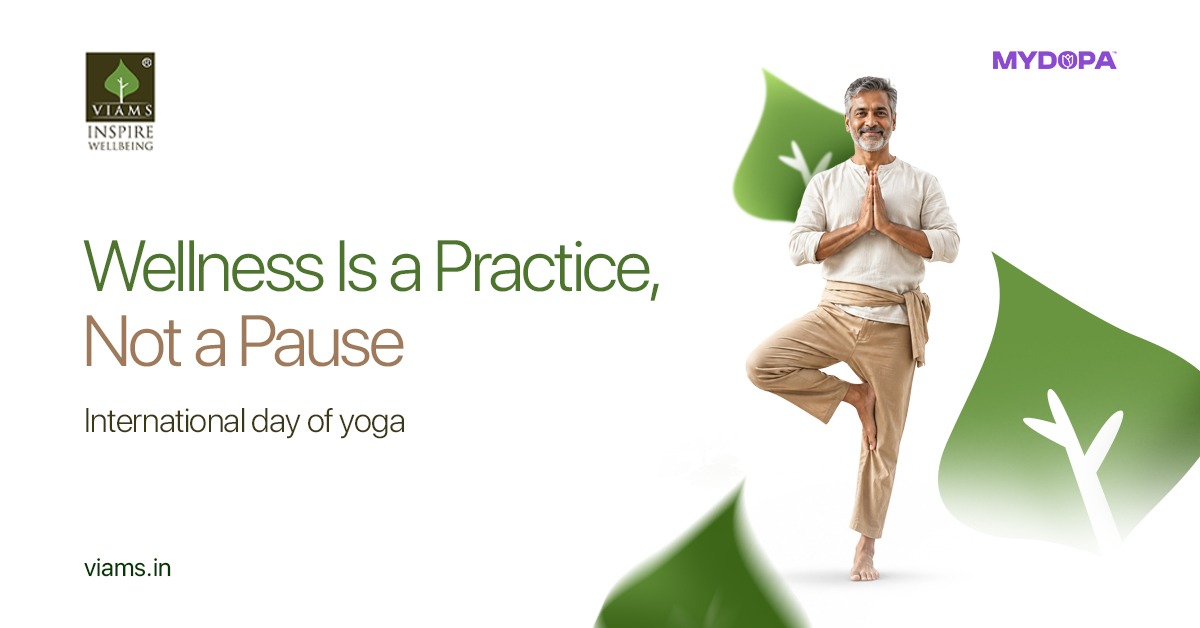
In today’s fast-moving world, stress, poor sleep, physical inactivity, emotional burnout, and lifestyle-related illnesses are becoming increasingly common across all age groups. Young adults struggle with anxiety and digital stress, while senior citizens often face mobility problems, chronic diseases, and neurological challenges.
Amid these modern health concerns, yoga continues to stand as one of the most powerful and accessible practices for overall well-being.
The International Day of Yoga is not merely about physical exercise or flexibility. It is a global reminder that health involves harmony between the body, mind, emotions, breathing, and nervous system.
Whether someone is a young student managing stress, a working professional facing burnout, or an elderly individual dealing with Parkinson’s Disease or mobility issues, yoga can offer meaningful support when practiced safely and consistently.
At VIAMS, we frequently encourage patients and caregivers to understand yoga not as a trend, but as a sustainable lifestyle practice that supports physical strength, emotional stability, and neurological wellness.
The International Day of Yoga is observed every year on June 21st across the world.
It was established to spread awareness about the physical, mental, emotional, and spiritual benefits of yoga.
Yoga originated in India thousands of years ago and continues to be practiced globally for:
Today, yoga is increasingly being integrated into supportive healthcare approaches for chronic illnesses, rehabilitation, mental health, and neurological wellness.
Many people mistakenly think yoga is only about difficult postures or flexibility. In reality, yoga is a holistic practice that includes:
The true purpose of yoga is balance—balance in movement, breathing, emotions, sleep, energy, and mental well-being.
Even simple yoga practices performed regularly can create meaningful health benefits over time.
One of the greatest strengths of yoga is that it can be adapted for people of different ages and health conditions.
Today’s younger generation faces:
Yoga may help improve:
Simple breathing practices and stretching routines can significantly support mental well-being in younger individuals.
Modern lifestyles often involve:
Yoga may support:
Many individuals also experience improved work-life balance through regular yoga practice.
As people age, maintaining mobility and emotional well-being becomes increasingly important. Gentle yoga practices may help senior citizens improve:
For elderly individuals, yoga is not about intensity—it is about maintaining movement, circulation, independence, and quality of life.
Parkinson’s Disease is a progressive neurological disorder that affects movement, coordination, balance, and several non-motor functions.
Patients commonly experience:
While yoga is not a replacement for medical treatment, many supportive yoga practices may help improve quality of life when performed under professional guidance.
Carefully adapted yoga routines may support:
Relaxation techniques and breathing exercises may also help reduce anxiety and mental stress commonly associated with chronic neurological conditions.
At VIAMS, integrative neurological care often focuses not only on symptom management but also on improving overall functional well-being and emotional confidence.
Yoga is meant for everybody—not only for highly flexible individuals.
Beginners, elderly individuals, and patients with physical limitations can all practice modified forms of yoga safely.
Yoga includes breathing, relaxation, emotional balance, and mental focus—not just stretching.
Gentle, medically guided yoga can often help improve balance, flexibility, confidence, and emotional health in older adults.
Yoga is a supportive wellness practice, not an instant cure.
Its benefits develop gradually with regular practice and should complement proper medical care.
Start Slowly
Focus on Consistency
Even 15–20 minutes daily can be beneficial when practiced regularly.
Improper techniques may cause strain or injury, especially in elderly individuals or neurological patients.
Yoga should be adapted according to age, mobility, and medical conditions.
Yoga works best as part of a comprehensive healthy lifestyle that includes:
One of the most overlooked aspects of yoga is its effect on emotional health. Many people today silently struggle with:
Yoga encourages:
For senior citizens and patients living with chronic conditions, emotional stability can significantly influence overall quality of life.
Healthy aging is not only about living longer—it is about preserving:
Regular movement, breathing practices, stress management, and healthy routines can support long-term neurological and physical well-being.
The International Day of Yoga reminds us that prevention and balance are often more powerful than waiting for illness to develop.
The International Day of Yoga promotes awareness about the physical, emotional, mental, and neurological benefits of yoga for people of all ages.
Yes. Gentle and medically guided yoga practices can help improve flexibility, balance,
breathing, and emotional well-being in older adults.
Yoga may support balance, flexibility, coordination, stress reduction, and overall quality of life when practiced under professional supervision.
Beginners can start with 15–20 minutes daily and gradually increase duration based on comfort and guidance.
Breathing exercises, relaxation techniques, and mindful movement may help calm the nervous system and improve emotional stability.
No. Yoga also includes breathing control, meditation, relaxation, emotional balance, and mind- body awareness.
Yes. Individuals with neurological, cardiac, orthopedic, or chronic medical conditions should seek professional guidance before beginning yoga practices.
The International Day of Yoga is a reminder that true health is built through balance, awareness, movement, breathing, and emotional well-being.
Yoga is not limited by age, fitness level, or medical condition. With proper guidance and realistic expectations, it can become a valuable part of healthy living for children, adults, senior citizens, and even individuals managing neurological conditions like Parkinson’s Disease.
In a world increasingly affected by stress and lifestyle-related illness, yoga continues to offer something simple yet deeply powerful—the ability to reconnect with one’s own body and mind.
Need expert guidance? Connect with VIAMS to get personalized support for your medical career journey.