Imagine a person who has spent years carefully managing diabetes, blood pressure, and heart health. Yet, in their late 50s or 60s, they begin experiencing constipation, loss of smell, sleep disturbances, and eventually hand tremors. Years later, they are diagnosed with Parkinson’s Disease.
Traditionally, Parkinson’s Disease was viewed purely as a disorder of the brain. However, emerging scientific research is changing this perspective. Today, many researchers believe that in a significant proportion of patients, Parkinson’s Disease may begin much earlier—and much farther away from the brain—inside the gastrointestinal tract.
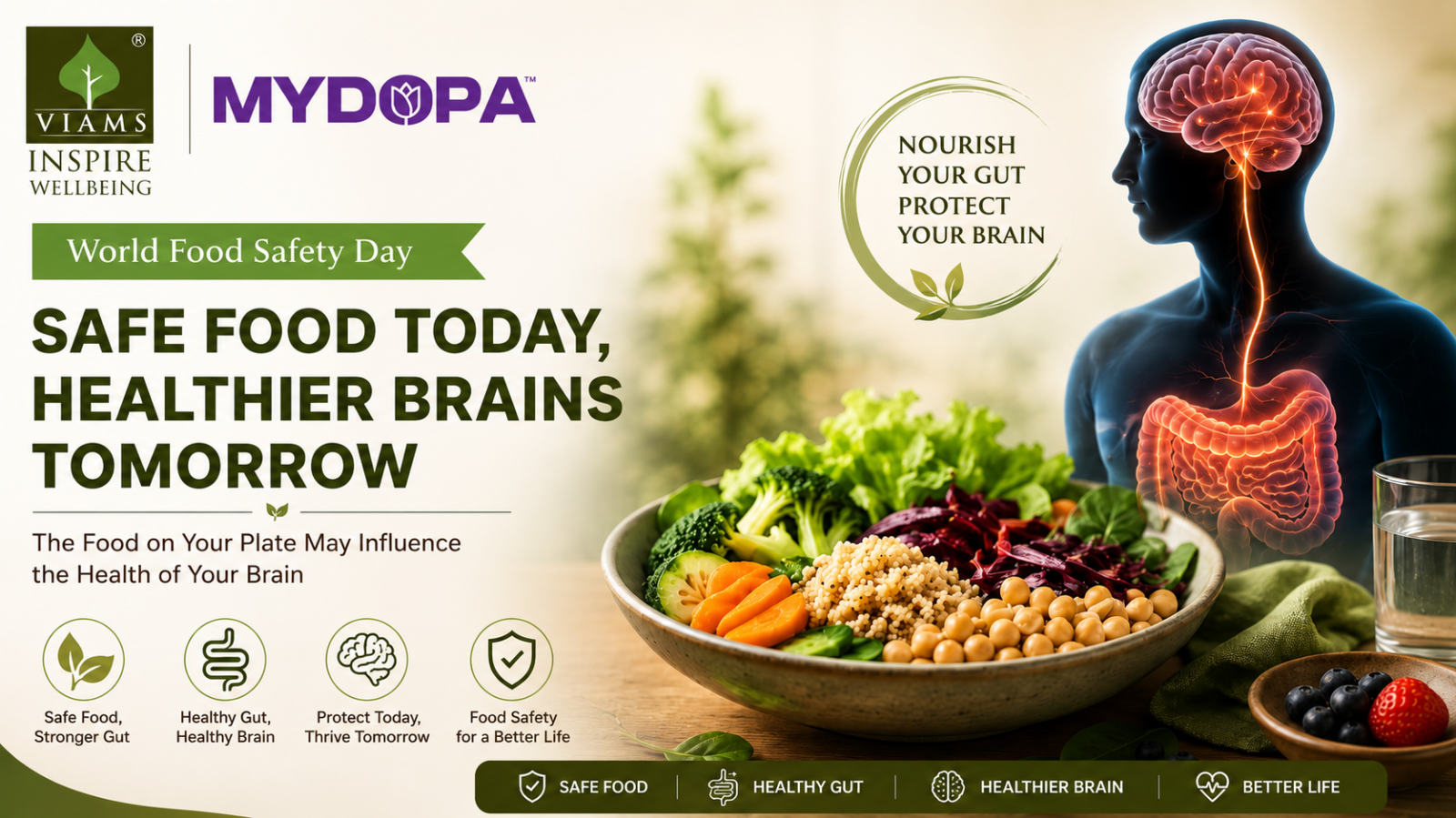
As the world observes World Food Safety Day, it becomes increasingly important to understand that safe food is not merely about preventing food poisoning or infections. Food safety may play a crucial role in protecting long-term neurological health, maintaining gut integrity, reducing toxic exposures, and potentially lowering the risk of neurodegenerative diseases such as Parkinson’s Disease.
At the Dr. K.V. Vijayan Institute of Ayurveda Medical Science (VIAMS), we recognize the profound relationship between the gut, food quality, digestion, and neurological health. Ayurveda has emphasized this connection for thousands of years, long before modern science began exploring the Gut-Brain Axis.
Most people associate Parkinson’s Disease with shaking hands or tremors. However, Parkinson’s Disease is far more complex.
It is a progressive neurodegenerative disorder that affects movement, cognition, mood, sleep, digestion, and overall quality of life.
Usually begin on one side of the body and may gradually worsen.
Muscle stiffness affecting daily activities and mobility.
Slowness of movement that makes routine tasks increasingly difficult.
Balance impairment that increases the risk of falls.
Many non-motor symptoms appear years before motor symptoms become obvious.
These include:
Interestingly, many of these early symptoms are directly related to the gastrointestinal system, supporting the emerging concept that Parkinson’s Disease may have strong roots in the gut.
One of the most exciting developments in Parkinson’s Disease research is the concept of the Gut-Brain Axis.
The gut and brain communicate continuously through:
Scientists have identified abnormal accumulations of alpha-synuclein protein within the gastrointestinal tract years before Parkinson’s Disease is clinically diagnosed.
Research suggests that:
This means that what enters the gut can potentially influence what happens in the brain.
World Food Safety Day reminds us that safe food is fundamental to health.
Food safety extends beyond avoiding acute illness. It includes protecting the body from:
Exposure to certain agricultural chemicals has been associated with an increased risk of Parkinson’s Disease.
Examples include:
Long-term exposure may contribute to oxidative stress and neuronal damage.
Unsafe food can introduce harmful microorganisms that:
Persistent inflammation may adversely affect neurological health.
Artificial additives, contaminants, and adulterants may place additional stress on metabolic and detoxification pathways.
Choosing genuine, quality-assured foods is therefore essential.
Highly processed foods often contain:
These foods may negatively affect gut microbial diversity and overall metabolic health.
Thousands of years before modern food safety regulations existed, Ayurveda placed tremendous importance on food quality.
Ayurveda states:
“Ahara is one of the primary pillars of life.”
Food is considered medicine when chosen, prepared, and consumed appropriately.
In Ayurveda, food is not merely a source of calories.
Food influences:
Improper food can become a source of disease.
Ayurveda warns against incompatible food combinations that may disturb digestion and metabolism.
Examples include:
Such practices may contribute to metabolic imbalance and accumulation of toxins (Ama).
Agni, the digestive and metabolic fire, is central to Ayurveda.
When Agni is impaired:
Strong Agni supports healthy tissues, including those associated with nervous system function.
Ayurveda recommends:
Consume freshly prepared meals whenever possible.
Choose foods appropriate for the season and environment.
Ensure food is hygienically prepared and stored.
Favor minimally processed foods.
Eat in a calm state and according to digestive capacity.
Food should be tailored to constitution, age, digestive strength, and disease condition.
For individuals living with Parkinson’s Disease, gut health is particularly important.
Common gastrointestinal challenges include:
Improving digestive health may help:
Purchase food from trusted vendors and quality-certified suppliers.
Reduce exposure to contaminants and residues.
Focus on whole-food nutrition.
Prevent microbial growth and spoilage.
Support digestion and bowel function.
Promote healthy gut motility.
Consistent eating patterns support digestive health.
At VIAMS, Parkinson’s Disease management extends beyond symptom control.
Our integrative approach includes:
Personalized treatment plans based on individual assessment.
Selected therapies aimed at supporting neurological and systemic health.
Balance training, mobility enhancement, and fall prevention.
Addressing communication and dysphagia challenges.
Supporting flexibility, balance, and mental well-being.
Addressing emotional health and caregiver burden.
Focusing on gut health, digestion, safe food practices, and individualized nutrition.
Emerging science and Ayurvedic wisdom increasingly converge on one important message:
The health of the gut profoundly influences the health of the brain.
While food alone cannot prevent every case of Parkinson’s Disease, consuming safe, clean, wholesome, and nutritionally balanced food may help reduce risk factors, support digestive health, and contribute to overall neurological well-being.
No single food causes Parkinson’s Disease. However, long-term exposure to certain environmental toxins and poor dietary habits may contribute to risk.
Research suggests that in many individuals, pathological changes may begin in the gastrointestinal system before neurological symptoms appear.
The disease affects the nervous system controlling intestinal movement, often years before motor symptoms develop.
Good gut health may improve digestion, nutrition, bowel function, and overall quality of life.
Ayurveda emphasizes fresh, clean, compatible, wholesome food prepared and consumed appropriately.
Reducing exposure to harmful chemicals may be beneficial, although no specific diet guarantees prevention.
Fiber-rich vegetables, fruits, whole grains, adequate fluids, and balanced meals support digestive health.
Currently, Parkinson’s Disease has no known cure. Ayurveda may play a supportive role in symptom management, rehabilitation, and quality-of-life improvement.
Food directly influences digestion, immunity, tissue nourishment, and long-term health.
VIAMS integrates Ayurvedic medicine, Panchakarma, nutrition, rehabilitation, and lifestyle guidance to support digestive and neurological health.
World Food Safety Day serves as a powerful reminder that every meal is an opportunity to support health.
Modern neuroscience increasingly recognizes the importance of the Gut-Brain Axis, while Ayurveda has emphasized the relationship between food, digestion, and health for thousands of years.
Safe food, clean food, and wholesome food are not merely nutritional choices—they are investments in long-term neurological wellness.
For individuals living with Parkinson’s Disease and those seeking preventive health strategies, protecting gut health should be considered an essential component of overall brain health.
At VIAMS, we believe that meaningful Parkinson’s care begins with understanding the whole person—not just the disease. Through Ayurveda, Panchakarma, Clinical Nutrition, Physiotherapy, Speech Therapy, Psychology, and Yoga, we help patients pursue better function, greater independence, and improved quality of life.