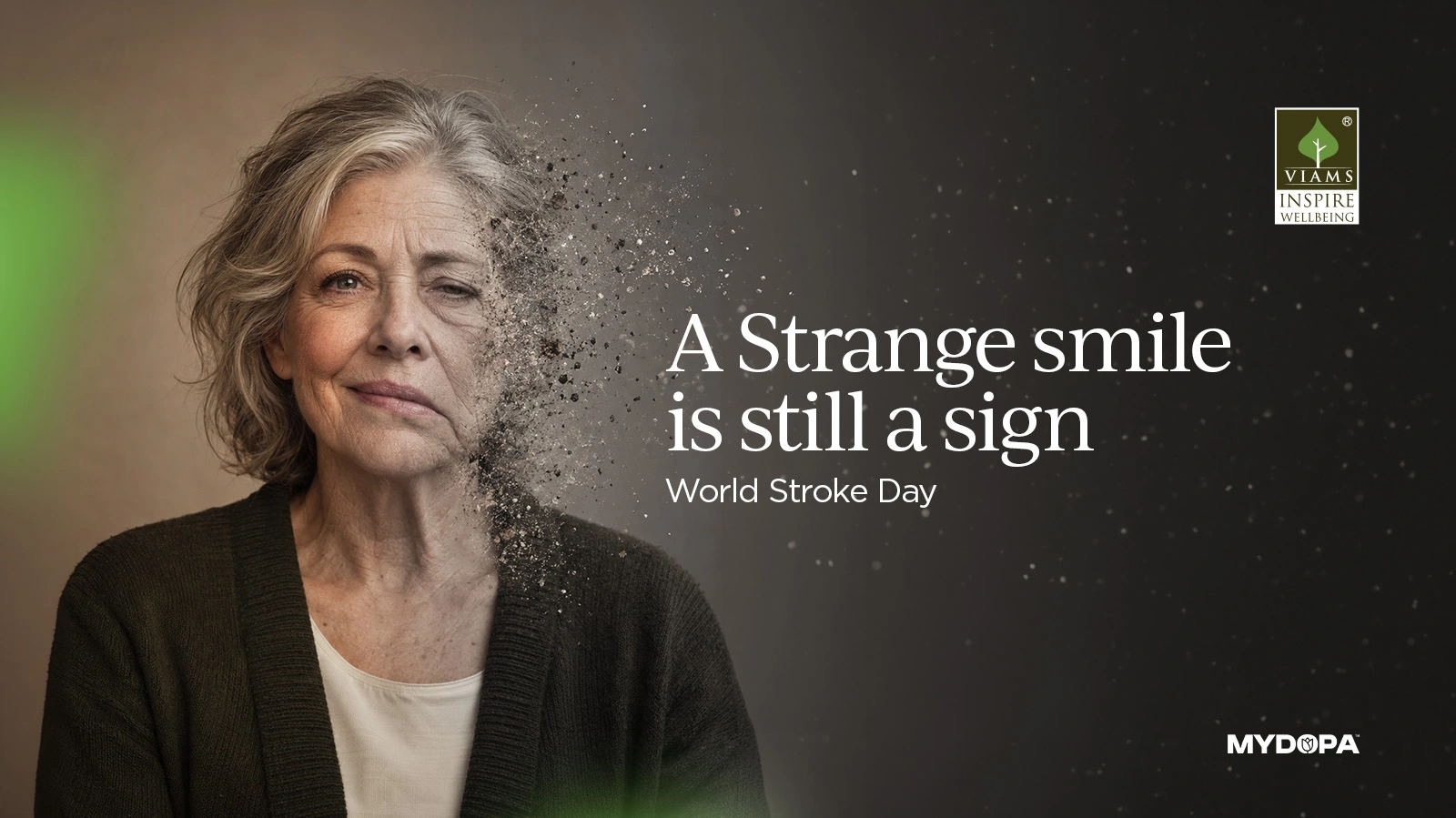
Every minute matters when a stroke occurs. For an older adult, a sudden change in speech, weakness in one arm or difficulty walking may be the beginning of a medical emergency. For their children and caregivers, recognising these warning signs can make a life-changing difference.
World Stroke Day 2026, observed on October 29, is an important reminder that stroke awareness, timely treatment and long-term rehabilitation can help save lives and preserve independence.
Stroke can affect people of any age, but the risk increases with age and is higher among people living with hypertension, diabetes, high cholesterol, heart disease and other vascular risk factors. Its effects may extend beyond the initial emergency, influencing mobility, communication, memory, emotional well-being and everyday activities.
For families caring for ageing parents, understanding stroke is not just a medical responsibility. It is an essential part of parent care.
At the Dr. K. V. Vijayan Institute of Ayurveda Medical Science (VIAMS), we recognise the importance of informed medical guidance, rehabilitation and coordinated care for people living with neurological conditions. This World Stroke Day, let us understand how to recognise stroke, reduce its risk, support survivors and recognise neurological complications that may develop after a stroke.
A stroke occurs when the blood supply to part of the brain is interrupted or when a blood vessel in the brain ruptures, causing bleeding. Brain cells depend on a continuous supply of oxygen and nutrients. When this supply is disrupted, brain tissue can become damaged.
There are two main types of stroke.
An ischaemic stroke occurs when a blood clot or another obstruction blocks a blood vessel supplying the brain. It is the most common type of stroke.
Risk factors include high blood pressure, diabetes, high cholesterol, smoking, certain heart conditions and previous vascular disease.
A haemorrhagic stroke occurs when a blood vessel ruptures and bleeds into or around the brain. Uncontrolled hypertension is an important risk factor.
Both types of stroke require urgent medical assessment. Because their treatments differ, medical professionals must determine the type of stroke before selecting appropriate treatment.
Ageing can bring several health challenges, but stroke should never be considered an inevitable part of growing older.
For people over 60, prevention and early recognition are especially important. A stroke can affect a person’s ability to walk, speak, swallow, remember information or perform daily activities independently.
The consequences may also affect the entire family. Adult children may need to coordinate hospital visits, medicines, rehabilitation sessions, dietary needs and ongoing supervision. Parents who were previously independent may suddenly require assistance with dressing, bathing, eating or moving around the house.
Understanding stroke risk and recognising warning signs can help families respond promptly rather than assuming that sudden changes are simply due to ageing.
The message for every family is simple: sudden neurological symptoms need immediate medical attention.
Stroke symptoms often develop suddenly. The BE FAST approach can help families recognise common warning signs.
Other warning signs can include sudden confusion, numbness on one side of the body, severe unexplained headache or difficulty coordinating movements.
Even if symptoms resolve within minutes, urgent medical evaluation is necessary. A transient ischaemic attack (TIA), sometimes called a mini-stroke, can be a warning of a future stroke.
Although not every stroke can be prevented, many risk factors can be managed. Prevention begins with regular health monitoring and sustainable lifestyle changes.
1.Keep blood pressure under control
High blood pressure is one of the most important modifiable risk factors for stroke. Many people have hypertension without obvious symptoms.
Encourage ageing parents to check their blood pressure regularly, attend medical appointments and take prescribed medicines consistently. Medication should not be stopped simply because blood pressure readings improve.
2.Manage diabetes and cholesterol
Persistently elevated blood glucose can damage blood vessels over time. High cholesterol can contribute to the formation of fatty deposits in arteries.
Regular medical reviews, appropriate medication, balanced meals and physical activity suited to the person’s abilities can help reduce vascular risk.
3.Encourage regular physical activity
Walking, supervised exercise, balance training and other appropriate activities can support cardiovascular health and mobility.
Older adults with previous strokes, significant balance difficulties or Parkinson’s disease should have an activity plan suited to their abilities and fall risk.
4.Follow a balanced diet
Encourage meals containing vegetables, fruits, whole grains, pulses and appropriate protein sources. Limit excessive salt, highly processed foods and foods high in unhealthy fats.
People with diabetes, swallowing difficulties, kidney disease or other medical conditions may require individual dietary advice.
5.Address smoking, alcohol and heart conditions
Smoking increases vascular risk. Excessive alcohol consumption can also contribute to health problems, including elevated blood pressure.
Atrial fibrillation, an irregular heart rhythm, can increase the risk of blood clots travelling to the brain. Appropriate assessment and preventive treatment may significantly reduce this risk.
6.Attend regular medical reviews
Routine consultations can help identify uncontrolled blood pressure, diabetes, cholesterol abnormalities and other risk factors before a major event occurs.
For parents with several medical conditions, maintaining an updated medicine list and sharing relevant medical records with their treating doctor can improve continuity of care.
Surviving a stroke is an important milestone, but recovery often continues long after the initial hospital treatment. The extent of recovery depends on factors such as the location and severity of the stroke, the person’s overall health, the speed of treatment and access to appropriate rehabilitation.
Some survivors regain much of their previous independence. Others experience persistent difficulties that require long-term support.
Stroke-related complications may include:
These challenges can affect not only the survivor but also the family members responsible for parent care.
Rehabilitation should begin as soon as the treating medical team considers it safe. The programme must be individualised and adjusted according to the survivor’s condition and progress.
Physiotherapy helps address weakness, balance, coordination, walking and mobility.
Occupational therapy supports the ability to perform daily activities, use the affected limbs and adapt the home environment.
Speech and swallowing therapy can assist people with communication difficulties and swallowing problems.
Psychological and cognitive support can help address emotional difficulties, memory problems and changes in everyday functioning.
Nutritional care helps maintain adequate nutrition and hydration while considering swallowing safety and other medical needs.
Medical follow-up is essential for managing vascular risk factors, reviewing medicines and preventing further strokes.
Progress may be gradual. Consistency, realistic goals, caregiver involvement and regular reassessment are important parts of recovery.
One important neurological complication that deserves attention is vascular parkinsonism, a condition associated with cerebrovascular disease affecting brain regions or networks involved in movement.
Parkinsonism describes a group of movement symptoms that may include slowness of movement, muscle stiffness, reduced step length and difficulties with balance. Vascular parkinsonism is one possible cause of these symptoms.
A stroke affecting particular brain structures or their connections can produce parkinsonian symptoms. In other cases, widespread small-vessel disease and multiple small vascular injuries may contribute to gradual difficulties with movement.
Vascular parkinsonism often presents with prominent difficulties involving the legs, walking and balance. Some people experience a short-stepped gait, freezing while walking or repeated falls. Symptoms and their progression vary from person to person.
However, not every stroke survivor develops Parkinsonism, and Parkinson’s disease is not the inevitable outcome of a stroke.
It is also important to distinguish vascular parkinsonism from Parkinson’s disease. Parkinson’s disease is a neurodegenerative disorder involving the progressive loss of dopamine-producing neurons, whereas vascular parkinsonism is associated with cerebrovascular injury. The conditions can sometimes coexist, making assessment more complex.
Consult a neurologist if a stroke survivor develops new or worsening:
A medical assessment may include a neurological examination, review of the stroke history, brain imaging and evaluation of other possible causes. Treatment depends on the underlying diagnosis.
Early recognition can help identify treatable contributors, improve safety and guide rehabilitation.
Parkinson’s disease and stroke are different conditions, but both can affect movement, balance, independence and quality of life.
Parkinson’s disease typically develops gradually, although symptoms and progression vary. Stroke generally causes sudden neurological symptoms, although some forms of vascular brain injury can produce more gradual changes.
People with Parkinson’s disease may also have vascular risk factors such as hypertension, diabetes and cardiovascular disease. Managing these risks is important for overall health and stroke prevention.
For families caring for a person with Parkinson’s disease, new facial asymmetry, sudden one-sided weakness or an abrupt change in speech should never automatically be attributed to Parkinson’s disease. These may be signs of a stroke and require emergency assessment.
Similarly, a stroke survivor who develops persistent movement difficulties should receive an appropriate neurological evaluation rather than assuming that every symptom is simply a consequence of the original stroke.
Stroke care and Parkinson’s disease management may involve several complementary approaches, but treatment must be guided by the correct diagnosis and the person’s individual needs.
Evidence-based medical treatment remains essential. Integrative care can complement appropriate medical management when its components are selected carefully, delivered safely and coordinated with the treating medical team.
At VIAMS, the focus on Ayurveda-based neurological care and rehabilitation reflects the importance of looking beyond an isolated symptom and considering mobility, daily functioning, comfort, emotional well-being and caregiver support.
An individualised supportive programme may include the following components, depending on clinical suitability:
The suitability of Ayurvedic medicines and procedures must be assessed individually. Evidence for specific interventions varies, and not all Ayurvedic therapies have been proven effective for stroke recovery or Parkinson’s disease.
Ayurvedic care should not replace emergency stroke treatment, prescribed stroke-prevention medicines, indicated neurological treatment or established rehabilitation. Any proposed intervention should be discussed with the treating team, particularly when the patient takes anticoagulants, antiplatelet medicines or Parkinson’s medications.
The aim of coordinated care is to support safe rehabilitation, preserve function where possible and improve quality of life—not to promise a cure or guaranteed recovery.