
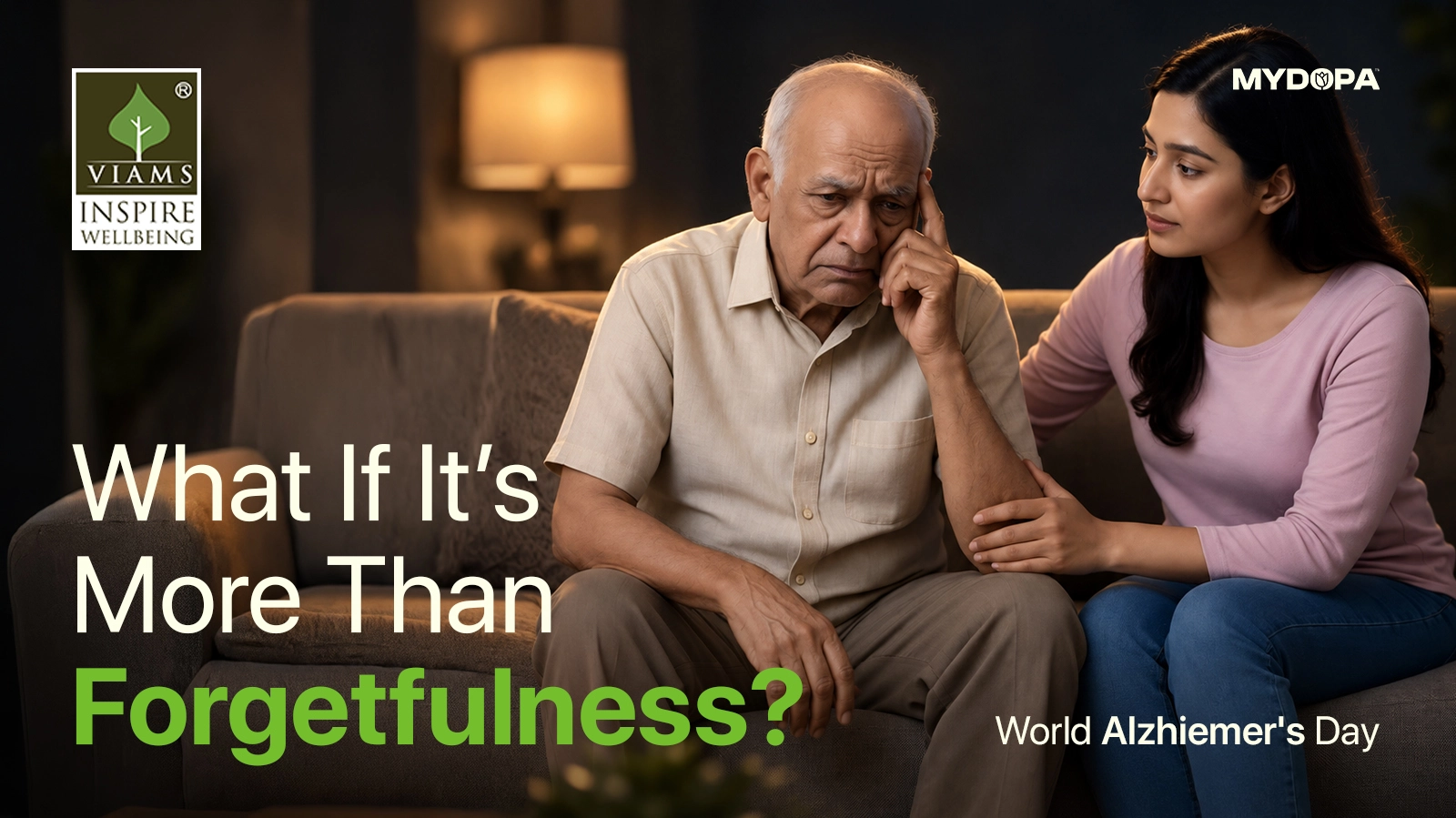
World Alzheimer’s Day 2026 | 21 September
The Earlier You Know, The More You Can Do: A Dementia Diagnosis Matters
A daughter notices that her father has started repeating questions. A son observes that his mother is struggling with familiar household tasks. A spouse becomes concerned when their partner forgets appointments, loses track of conversations, or behaves differently from before.
The first reaction may be fear: “Is this Alzheimer’s disease?”
But memory loss is not always caused by Alzheimer’s disease. Changes in memory, behaviour, communication, and daily functioning can have several causes. Some may be associated with neurological disease, while others may relate to medications, sleep problems, mood disorders, nutritional deficiencies, or other medical conditions.
Before starting treatment, it is important to understand the person, the symptoms, and the possible underlying causes.
World Alzheimer’s Day 2026 reminds us that early recognition, appropriate diagnosis, coordinated healthcare, and compassionate support can help individuals and families make more informed decisions.
At VIAMS – Dr. K. V. Vijayan Institute of Ayurveda Medical Science Pvt. Ltd., we believe that healthcare should be personalised, responsible, and centred on the dignity of every individual.
World Alzheimer’s Day is observed annually on 21 September. It forms part of World Alzheimer’s Month, an international awareness campaign coordinated by Alzheimer’s Disease International (ADI).
The 2026 campaign theme is:
“The Earlier You Know, The More You Can Do: A Dementia Diagnosis Matters.”
The campaign highlights the importance of timely diagnosis, reducing stigma, and helping people and families access appropriate care, information, and support. World Alzheimer’s Day serves as the focal point of awareness activities conducted throughout September.
Awareness is not simply about recognising a disease. It is also about creating communities where people living with dementia are treated with understanding and respect rather than embarrassment, fear, or discrimination.
Dementia is a clinical syndrome, not a single disease. It involves changes in memory, thinking, communication, behaviour, or the ability to perform everyday activities.
Alzheimer’s disease is the most common cause of dementia, but dementia can also result from other conditions, including vascular disease, dementia with Lewy bodies, frontotemporal disorders, and mixed causes.
Possible changes may include:
These symptoms do not automatically confirm Alzheimer’s disease. The pattern, duration, severity, associated medical conditions, and effect on daily life must be assessed.
Memory changes should also not be dismissed as an inevitable part of ageing. Although dementia is more common in older adults, it is not a normal or unavoidable consequence of growing older.
Early assessment can help individuals and families understand what may be happening and decide on appropriate next steps.
A comprehensive evaluation may help healthcare professionals:
Doctors may use medical history, physical and neurological examinations, cognitive assessments, blood investigations, medication reviews, and brain imaging when appropriate. Additional tests may be considered depending on the individual’s symptoms and clinical findings.
A diagnosis should be communicated respectfully, allowing the person and family to ask questions and understand the implications.
Early diagnosis does not guarantee a particular outcome, but it can create more opportunities for planning, support, and informed decision-making.
The Value of Clinically Appropriate Cross-Consultation
Memory loss and cognitive decline can be complex. A short consultation may not always provide a complete understanding of the patient’s medical history, neurological status, mental health, medications, and functional needs.
For this reason, appropriately coordinated cross-consultation can be valuable before initiating a new medicine or treatment programme.
Depending on the patient’s presentation, the assessment may involve:
Neurological or Geriatric Assessment
A neurologist or geriatrician may evaluate cognitive changes, neurological signs, progression of symptoms, and possible causes of impairment.
General Medical Evaluation
A physician or internal medicine specialist may review general health, diabetes, hypertension, infections, nutritional concerns, thyroid disorders, sleep problems, and other medical contributors.
Cognitive, Psychiatric, or Neuropsychiatric Assessment
When mood changes, anxiety, behavioural symptoms, depression, or complex cognitive concerns are present, an appropriate mental-health or neuropsychiatric assessment may be helpful.
Medication Reconciliation
A complete list of prescription medicines, over-the-counter products, and supplements should be reviewed. Some medicines or combinations may contribute to confusion, drowsiness, falls, or cognitive symptoms.
Relevant Investigations
Investigations should be selected according to the patient’s history and examination. Not every person requires every test, scan, or specialist consultation.
The objective is not to make every patient consult multiple doctors unnecessarily. Instead, the treating team should determine which assessments are clinically justified.
The principle is simple: right assessment before right treatment.
Effective communication between healthcare professionals, shared decision-making, informed consent, and patient participation are essential. Cross-consultation can improve the breadth of clinical consideration, but it cannot guarantee diagnostic accuracy or eliminate uncertainty.
Urgent symptoms should never be delayed while waiting for multiple consultations.
Patient safety must remain central throughout the care journey.
Medication Safety
Patients and caregivers should understand the purpose, dosage, timing, and possible side effects of prescribed medicines. Medicines should not be stopped, increased, or changed independently.
Regular medication reviews may help reduce duplication, interactions, and avoidable adverse effects.
Fall Prevention
Changes in balance, attention, vision, strength, or judgement may increase the risk of falls. The home environment should be reviewed for hazards such as loose rugs, poor lighting, slippery surfaces, and unsafe bathroom arrangements.
Wandering and Getting Lost
Some people with dementia may become disoriented or have difficulty finding their way. Families can discuss appropriate safety plans, emergency contact information, supervision, and identification measures with the treating team.
Communication and Dignity
Speak calmly, use simple sentences, allow sufficient time for responses, and avoid humiliating or arguing with the person. Whenever possible, involve the individual in decisions concerning their care.
Swallowing and Nutrition
If swallowing difficulty, coughing during meals, weight loss, or recurrent chest infections occurs, professional assessment may be necessary. Speech and swallowing specialists, physicians, and dietitians may contribute when clinically indicated.
Families often notice changes before anyone else. Their observations can provide valuable information during clinical assessment.
Caregivers can support the patient by:
Family members should avoid labelling a person as “difficult,” “careless,” or “forgetful” without understanding the reason for their behaviour.
Caregiving can also be emotionally and physically demanding. Caregivers need rest, information, social support, and professional guidance. Supporting the caregiver is an important part of supporting the person living with dementia.
Alzheimer’s disease and dementia can affect more than memory. A person may experience changes in mobility, communication, emotional well-being, sleep, nutrition, daily activities, and social participation.
Integrated healthcare aims to consider these interconnected needs rather than focusing only on one symptom.
Depending on the patient’s condition, coordinated care may involve:
The specific services required should be determined through individual assessment. Rehabilitation and supportive care are not substitutes for appropriate diagnosis or medical management.
The World Health Organization recognises rehabilitation, physical activity, cognitive stimulation, social engagement, psychoeducation, and caregiver support as important components of dementia care.
VIAMS – Dr. K. V. Vijayan Institute of Ayurveda Medical Science Pvt. Ltd., Kerala, approaches healthcare through an integrated and patient-centred framework.
For individuals with memory concerns or cognitive difficulties, our role may include:
An individualised plan is developed according to the patient’s symptoms, diagnosis, functional status, medical history, and healthcare requirements.
Ayurveda-based interventions should be considered responsibly and in coordination with appropriate medical care. Ayurveda should not be presented as a replacement for neurological diagnosis, prescribed treatment, or clinically necessary investigations.
The purpose of integrated care is to support the whole person while respecting the complexity of cognitive disorders and the importance of evidence-informed clinical decisions.
Myth 1: “Memory loss is always normal ageing.”
Correction: Occasional forgetfulness may occur with ageing, but persistent or progressive changes that affect daily life deserve professional assessment.
Myth 2: “Every memory problem is Alzheimer’s disease.”
Correction: Cognitive symptoms can have multiple causes. Appropriate evaluation is necessary before reaching a diagnosis.
Myth 3: “More medicines automatically mean better care.”
Correction: Treatment should be based on clinical need, expected benefit, safety, possible interactions, and the patient’s preferences.
Myth 4: “One consultation answers every clinical question.”
Correction: Some cases require additional assessment or specialist input. The need for cross consultation should be decided clinically.
Myth 5: “Caregivers should make every decision without involving the patient.”
Correction: Patients should be involved in decisions as much as their capacity and circumstances allow. Their preferences, dignity, and rights remain important.
Before a consultation, consider preparing the following:
Professional evaluation is advisable when memory or cognitive changes are:
Sudden confusion, rapid deterioration, new weakness, difficulty speaking, seizures, severe headache, loss of consciousness, or other acute neurological symptoms require urgent medical attention.
Sudden confusion should not automatically be assumed to be dementia. Acute medical conditions, infections, medication effects, metabolic problems, or other urgent causes may need immediate evaluation.
World Alzheimer’s Day 2026 will be observed on 21 September 2026. The 2026 ADI campaign theme focuses on the value of earlier diagnosis and the importance of understanding that a dementia diagnosis matters.
Dementia describes a group of symptoms affecting cognition and daily functioning. Alzheimer’s disease is one of the diseases that can cause dementia and is the most common cause.
Early assessment can help identify possible causes, plan care, review medicines, address safety concerns, and support informed decisions. It does not guarantee a particular treatment outcome.
Some patients may benefit from cross-consultation, depending on their symptoms and medical history. However, every patient does not need to consult every specialist.
Assessment may include medical history, neurological examination, cognitive testing, medication review, selected laboratory investigations, and brain imaging when clinically indicated.
Ayurveda-based supportive care should not replace neurological diagnosis, prescribed treatment, or necessary investigations. Any complementary approach should be discussed with the treating healthcare team.
Families can provide respectful communication, safe routines, appointment support, medication assistance, emotional reassurance, and caregiver support while preserving the person’s dignity and participation.
Assessment is appropriate when memory or cognitive changes persist, progress, affect daily life, or concern the individual or family. Sudden or severe symptoms require urgent medical attention.
Behind every memory concern is a person with a history, identity, relationships, preferences, and dignity.
Alzheimer’s disease and dementia require more than assumptions or isolated treatment decisions. They require careful assessment, appropriate communication, patient safety, family participation, and coordinated healthcare.
Every patient deserves to be understood before treatment begins.
At VIAMS, our approach is centred on individualised assessment, integrated supportive care, rehabilitation, coordination with appropriate medical professionals, and education for families and caregivers.
Need expert guidance? Connect with VIAMS to explore personalized support for your Alzheimer’s disease and cognitive healthcare needs.