
VIAMS Health Awareness
17 September 2026
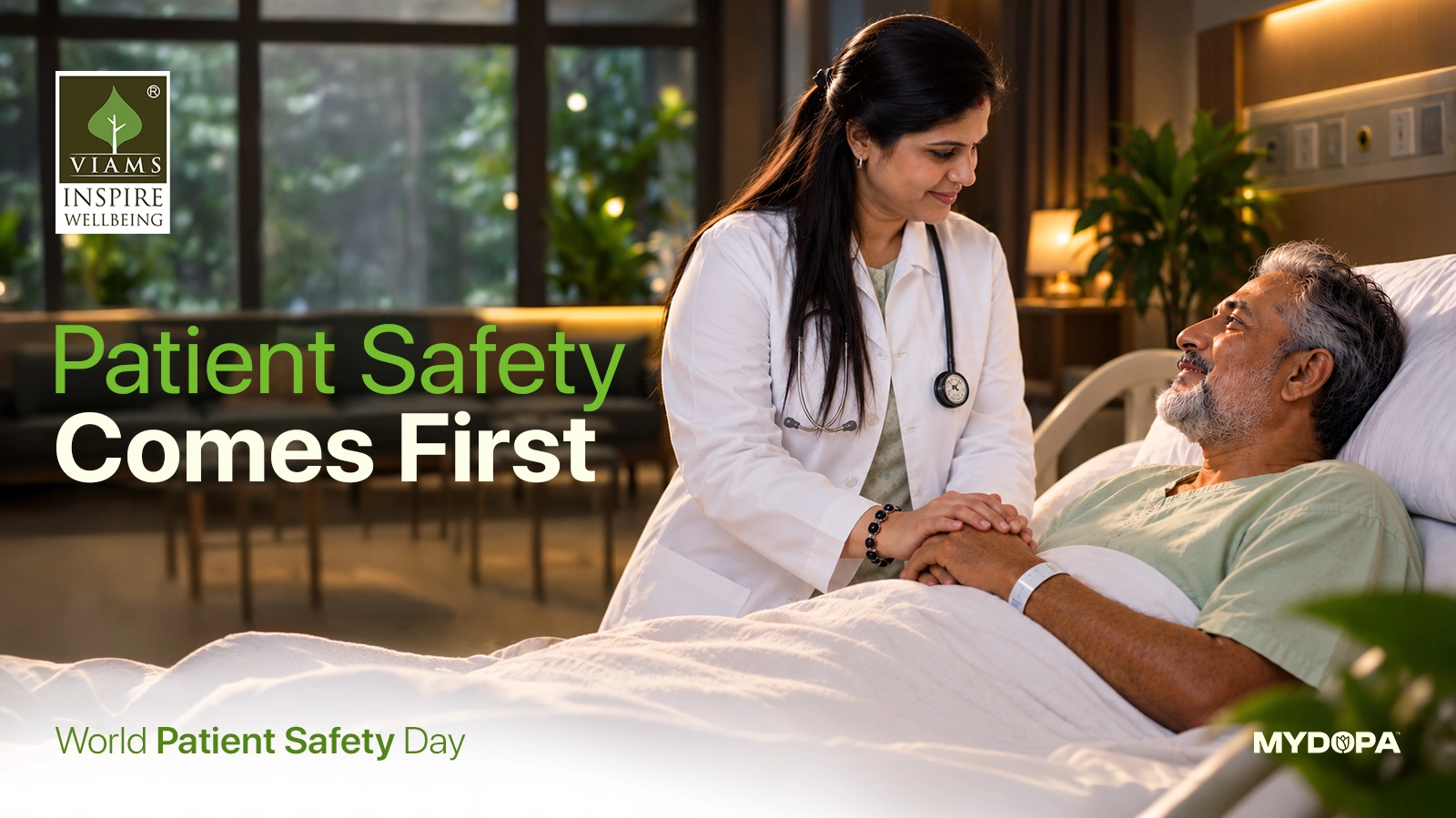
World Patient Safety Day 2026 reminds us that safe healthcare is not limited to hospitals or medical procedures. For people living with Parkinson’s disease and other long-term health conditions, safety must be part of every stage of care—from diagnosis and medication management to rehabilitation, home support, and daily life.
The World Health Organization (WHO) has selected “Safe care for noncommunicable diseases” as the theme for 2026, with the slogan “Safe care for life!” This focus highlights the importance of coordinated, continuous, and patient-centred healthcare.
For older adults, Parkinson’s disease patients, and their families, this day offers an opportunity to ask an important question:
Are we doing enough to ensure that every patient receives safe, appropriate, and respectful care?
At VIAMS, we believe that meaningful healthcare includes not only treatment but also patient education, communication, rehabilitation, and support for families.
World Patient Safety Day is an annual global awareness observance led by the World Health Organization. It aims to improve understanding of patient safety and encourage actions that reduce avoidable harm in healthcare.
Patient safety means reducing unnecessary risks, errors, and preventable harm during healthcare delivery. It involves the shared responsibility of healthcare professionals, patients, families, caregivers, and healthcare institutions.
The 2026 theme focuses on noncommunicable diseases (NCDs), which include conditions such as Parkinson’s disease, diabetes, cardiovascular diseases, and cancer.
People living with long-term conditions often require repeated consultations, ongoing medication, rehabilitation, and care across different settings. This makes communication, coordination, and safe decision-making especially important.
Parkinson’s disease is a progressive neurological condition that can affect movement and several non-motor functions. Symptoms and care needs vary from one person to another.
As the condition changes, patients may experience challenges related to:
These challenges do not mean that every person will experience the same complications. However, they highlight why care should be regularly reviewed and adapted to the patient’s needs.
1.Accurate Diagnosis and Regular Reassessment
Do you feel confident that your Parkinson’s disease diagnosis is accurate?
This is an important question, particularly when symptoms change, the response to treatment is unexpected, or other neurological conditions may resemble Parkinson’s disease.
Parkinson’s disease is primarily diagnosed through clinical assessment, medical history, and neurological examination. There is no single routine test that confirms every case.
A specialist assessment or second opinion may help when the diagnosis is uncertain or when symptoms require further evaluation.
Patients and families should feel comfortable asking:
Seeking clarification is a responsible part of patient engagement, not a reason for fear.
2. Medication Safety and Medication Review
Medication safety is an essential part of Parkinson’s disease care.
Many patients take several medicines for Parkinson’s disease and other health conditions, such as diabetes, hypertension, or heart disease. As the number of medicines increases, communication between healthcare providers becomes increasingly important.
Patients and caregivers should maintain an updated list of:
Never stop, increase, reduce, or change prescribed Parkinson’s medication without appropriate medical guidance. Sudden changes in some Parkinson’s medicines can lead to serious complications.
During consultations, patients should inform their healthcare team about new symptoms, side effects, missed doses, or changes in their medication schedule.
A medication review can help identify potential duplication, interactions, or other concerns that require professional assessment.
3.Preventing Falls and Supporting Safe Mobility
Falls are an important safety concern for some people living with Parkinson’s disease, particularly those experiencing balance difficulties, freezing of gait, postural instability, or changes in mobility.
However, fall risk varies between individuals and should be assessed according to the person’s symptoms and environment.
Families can support safer mobility by:
A physiotherapist can assess movement and recommend suitable exercises, mobility strategies, and safety adaptations.
The aim is not to restrict independence unnecessarily, but to help patients remain as active and safe as possible.
4.Swallowing Safety and Aspiration Awareness
Some people with Parkinson’s disease develop swallowing difficulties, known as dysphagia. These difficulties may affect eating, drinking, and medication administration.
Swallowing problems can increase the risk of food or liquid entering the airway, a complication known as aspiration. Not everyone with Parkinson’s disease experiences dysphagia.
Warning signs that require medical assessment may include:
A qualified healthcare professional, including a speech and language therapist where available, can assess swallowing and recommend appropriate strategies.
Families should not assume that swallowing difficulties are simply a normal or unavoidable part of ageing. Early assessment may help identify risks and guide suitable support.
5.Communication Between Patients, Families, and Healthcare Teams
Effective communication is one of the foundations of patient safety.
Older adults and Parkinson’s disease patients may consult several healthcare professionals, including neurologists, physicians, physiotherapists, speech therapists, occupational therapists, and other practitioners.
When information is not communicated clearly, important details about medication, symptoms, allergies, or treatment changes may be missed.
Patients and caregivers can improve communication by:
Patients should be treated as active partners in decisions about their care, with their preferences and concerns taken seriously.
6.The Role of Families in Parkinson’s Disease Care
Families play a valuable role in supporting older adults and people living with Parkinson’s disease.
A son or daughter may help with appointments, medication organization, mobility, communication, and emotional support. However, caregiving should respect the patient’s dignity, independence, and right to participate in decisions.
Helpful family support includes:
Caregivers also need support. When family members understand the patient’s care plan and know whom to contact, they may be better prepared to respond to changing needs.
7.Integrated Healthcare and Patient Safety
Parkinson’s disease may affect several aspects of a person’s life, including movement, communication, daily activities, sleep, and emotional wellbeing.
Integrated healthcare aims to coordinate appropriate services around the individual rather than treating each concern in isolation.
Depending on the patient’s needs, a care team may include:
Medical assessment
Review of diagnosis, symptoms, medicines, and relevant health conditions. Physiotherapy
Individualized support for mobility, balance, strength, and physical function. Speech and swallowing support
Assessment and guidance for communication and swallowing concerns when indicated. Occupational therapy and counselling
Support for daily activities, participation, and psychological wellbeing.
Ayurveda-based supportive care
Individualized Ayurvedic care integrated with appropriate medical assessment and rehabilitation.
At VIAMS, our integrated Ayurveda-based neuro-rehabilitation approach seeks to address the individual needs of people living with Parkinson’s disease through coordinated care and rehabilitation.
The specific treatments and services recommended should depend on clinical assessment. Integrated care should complement appropriate medical management and should never encourage patients to discontinue essential treatment or delay urgent medical attention.
8.Common Patient Safety Mistakes to Avoid
Mistake 1: Changing medication without consultation
Patients may change their medication schedule because of perceived side effects, missed doses, or advice from others.
Safer approach: Discuss medication concerns with the treating healthcare professional and obtain guidance on any changes.
Mistake 2: Ignoring new or worsening symptoms
A new symptom should not automatically be attributed to Parkinson’s disease. Safer approach: Report significant or persistent changes and seek timely clinical assessment.
Mistake 3: Assuming falls are unavoidable
Balance difficulties may occur, but falls should not simply be accepted without assessment.
Safer approach: Discuss fall risk with the healthcare team and consider appropriate mobility and environmental strategies.
Mistake 4: Following every online treatment claim
Patients and families may encounter promises of guaranteed cures or rapid results.
Safer approach: Ask whether the treatment has an appropriate clinical rationale, what its potential risks are, and whether it has been evaluated for the patient’s specific condition.
Mistake 5: Excluding the patient from decisions
Caregivers may unintentionally make decisions without involving the person receiving care.
Safer approach: Encourage shared decision-making while respecting the patient’s capacity, preferences, and need for support.
9.Practical Patient Safety Checklist
Patients and families can use this checklist during routine care:
Your safety checklist
This checklist is intended for awareness and discussion. It does not replace an individualized medical safety assessment.
10.When Should Patients Seek Medical Attention?
Patients with Parkinson’s disease and their caregivers should seek appropriate medical assessment when they notice significant changes in symptoms, new difficulties with daily activities, or concerns about treatment safety.
Urgent medical care may be necessary for symptoms such as sudden weakness, new severe confusion, serious breathing difficulties, or other signs of an acute medical emergency.
When in doubt, contact a qualified healthcare professional or emergency service as appropriate to the situation.
11.VIAMS: A Patient-Centred Approach to Parkinson’s Care
At VIAMS – Dr. K. V. Vijayan Institute of Ayurveda Medical Science Pvt. Ltd., we recognize that Parkinson’s disease care involves more than managing an individual symptom.
Our approach combines Ayurveda-based healthcare with relevant rehabilitation and allied healthcare support, according to each patient’s requirements.
We emphasize the importance of:
Our objective is to support patients and families with informed guidance while respecting the role of appropriate medical evaluation and evidence-informed care.
Safe care begins with listening, assessment, communication, and shared responsibility.
1.What is the theme of World Patient Safety Day 2026?
The theme is “Safe care for noncommunicable diseases”, with the slogan “Safe care for life!” The WHO campaign focuses on strengthening safety in long-term care and encouraging meaningful involvement of patients and communities.
2.Why is patient safety important in Parkinson’s disease?
Parkinson’s disease may require long-term medical management, rehabilitation, and support across different healthcare settings. Safe medication use, communication, fall prevention, and regular assessment can help address potential risks.
3.Should Parkinson’s medication be changed without medical advice?
No. Patients should not independently change prescribed Parkinson’s medication. Discuss concerns about dosage, side effects, or missed doses with the appropriate healthcare professional.
4.Can a second opinion help when a Parkinson’s diagnosis is uncertain?
A second opinion from a qualified clinician may help clarify the diagnosis, consider alternative explanations, or identify whether further assessment is appropriate.
5.How can families improve safety at home?
Families can reduce environmental hazards, support safe mobility, maintain medication records, communicate symptom changes, and seek professional guidance for specific concerns.
6.What should caregivers do if a Parkinson’s patient develops swallowing difficulties?
Swallowing difficulties should be discussed promptly with a healthcare professional. Assessment may help identify risks and determine whether speech and swallowing support or other interventions are appropriate.
7.How can VIAMS help with Parkinson’s disease care?
VIAMS provides Ayurveda-based integrated healthcare and neuro-rehabilitation support, with care tailored to individual needs. Families can contact the institution to discuss their concerns and explore appropriate guidance following clinical assessment.
Conclusion: Safe Care Is a Shared Responsibility
World Patient Safety Day 2026 is a reminder that healthcare safety extends beyond a single consultation or treatment session. For people living with Parkinson’s disease, safe care involves accurate assessment, responsible medication management, rehabilitation, clear communication, and meaningful support from families and healthcare professionals.
Every patient deserves to be heard, respected, and involved in decisions about their healthcare.
At VIAMS, we remain committed to supporting patients and families through an integrated, patient-centred approach to Parkinson’s disease care.
Need expert guidance? Connect with VIAMS to explore personalized support for your Parkinson’s care and healthcare needs.
Connect with VIAMS
If you or your family member would like to discuss Parkinson’s disease care, you can reach out to VIAMS for further information and guidance.
Visit VIAMS Website
Medical Disclaimer: This article is intended for general health education and awareness. It does not replace individualized medical consultation, diagnosis, or treatment. Patients should seek advice from qualified healthcare professionals for their specific needs.