Parkinson’s disease can change the lives of patients and their families in many ways. A parent who once walked confidently may begin taking smaller steps. Tremors may make eating difficult, while stiffness, poor sleep, constipation, speech changes and reduced independence can affect everyday life. For adult children and caregivers, finding the right treatment and providing appropriate parent care can become a major responsibility.
One question comes up repeatedly: What is the best medicine for Parkinson’s disease?
The answer is that there is no single medicine or treatment that works best for every patient. Parkinson’s disease affects people differently, and treatment must be tailored to their symptoms, health status, disease stage and personal goals.
At Dr. K. V. Vijayan Institute of Ayurveda Medical Science (VIAMS), the approach to Parkinson’s care centres on personalised Ayurvedic assessment, appropriate medicines and therapies, and integrated neuro-rehabilitation. MYDOPA, an herbal formulation developed around Mucuna pruriens, is also relevant to discussions about Ayurveda-based Parkinson’s care.
Understanding the available options helps patients and families make informed decisions and seek care that addresses not only tremors but also movement, speech, sleep, emotional wellbeing and independence.
Parkinson’s disease is a progressive neurological condition that affects movement and can also influence several non-movement functions of the body. It is associated with the loss or dysfunction of dopamine-producing nerve cells in the brain. Dopamine is a chemical messenger involved in controlling smooth, coordinated movement.
As dopamine signalling changes, a person may develop symptoms such as:
Not every patient experience all these symptoms. Some people primarily experience tremors, while others struggle more with stiffness, balance, mobility or non-motor symptoms.
Parkinson’s disease also requires distinction from other neurological conditions. For example, a parent with stroke may develop movement difficulties due to brain injury, and some symptoms can resemble Parkinson’s disease. However, stroke-related movement disorders and Parkinson’s disease are not the same condition and require appropriate assessment.
There is no universally best medicine for Parkinson’s disease because the condition is complex and individual responses vary.
The most appropriate treatment depends on the person’s symptoms, age, other medical conditions, current medicines, functional abilities and treatment goals.
Medicines such as levodopa, dopamine agonists and monoamine oxidase-B inhibitors are used in Parkinson’s disease management. Levodopa is particularly important for improving movement symptoms in many patients.
These medicines can help reduce stiffness, slowness and tremors. However, treatment may need adjustment over time, and some patients experience fluctuations in symptom control or adverse effects.
A qualified clinician should review the treatment plan regularly. Patients should not stop, reduce or change prescribed Parkinson’s medicines without appropriate medical guidance.
Tremor reduction alone does not necessarily mean that a patient is functioning well.
A person may experience less shaking but continue to struggle with walking, speech, sleep, constipation, anxiety or daily activities. Another patient may have relatively mild tremors but significant balance difficulties.
This is why treatment should assess the whole person rather than focus on a single symptom.
A comprehensive care plan considers mobility, strength, flexibility, communication, swallowing, nutrition, psychological wellbeing and the ability to perform everyday activities.
Ayurveda has its own diagnostic framework and treatment principles for understanding neurological symptoms. Parkinson’s disease is commonly discussed in relation to Kampavata, an Ayurvedic condition associated with tremors and disturbances in movement.
Ayurvedic assessment may consider the pattern of symptoms, digestive function, sleep, physical strength, daily routine and individual constitution. The resulting treatment plan may include appropriately selected Ayurvedic medicines, therapeutic procedures, dietary guidance and lifestyle modifications.
Ayurvedic care is not a single prescription applied to every patient. The clinician considers the patient’s presentation and overall health before determining the appropriate approach.
Depending on the assessment, treatment may involve:
The aim is to develop a personalised plan that addresses relevant symptoms and functional difficulties while monitoring the patient’s response.
Ayurvedic treatment can play an important role in a patient’s care plan. However, the extent of benefit varies, and claims of a complete cure or guaranteed reversal of Parkinson’s disease are not supported by established clinical evidence.
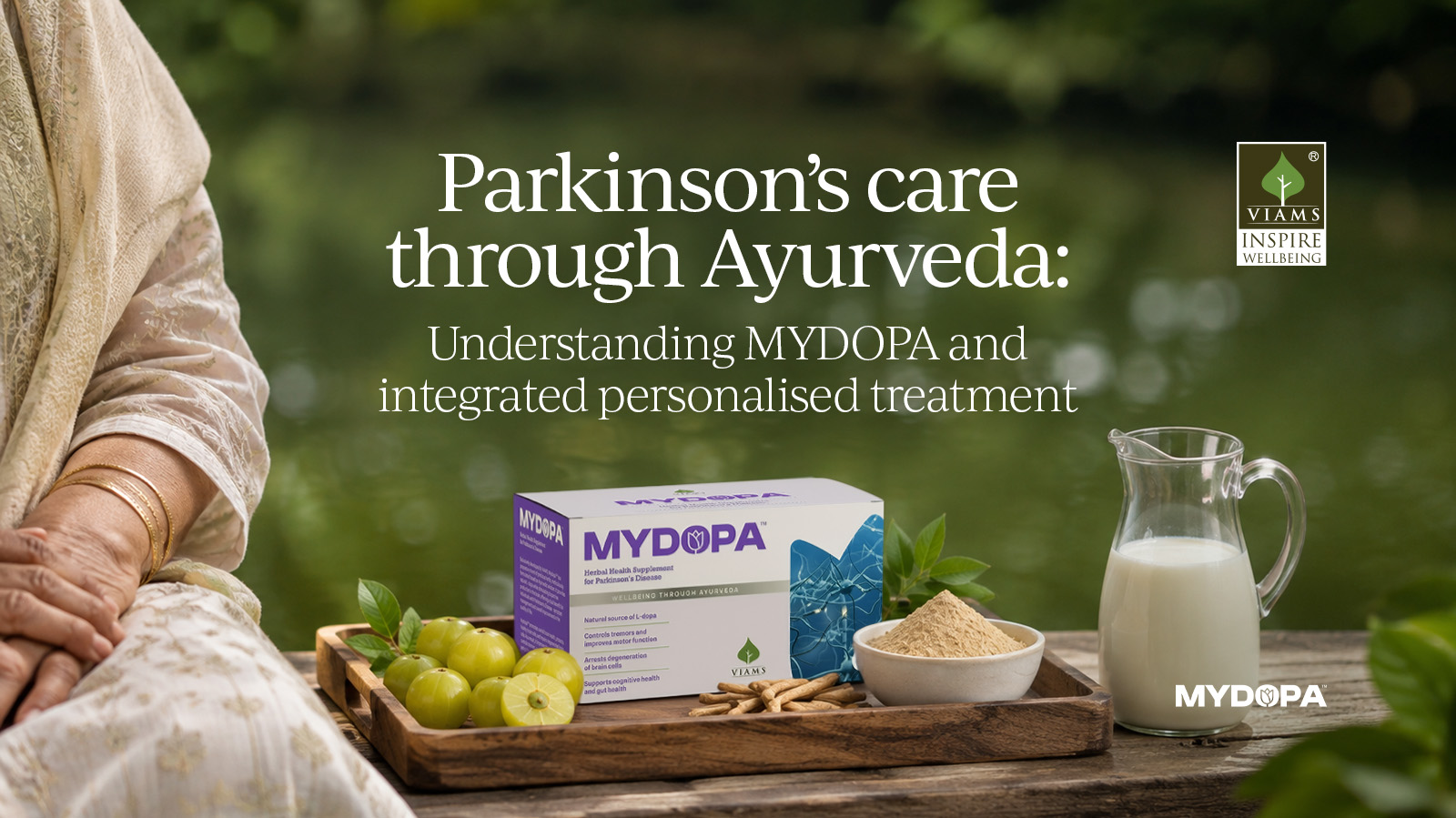
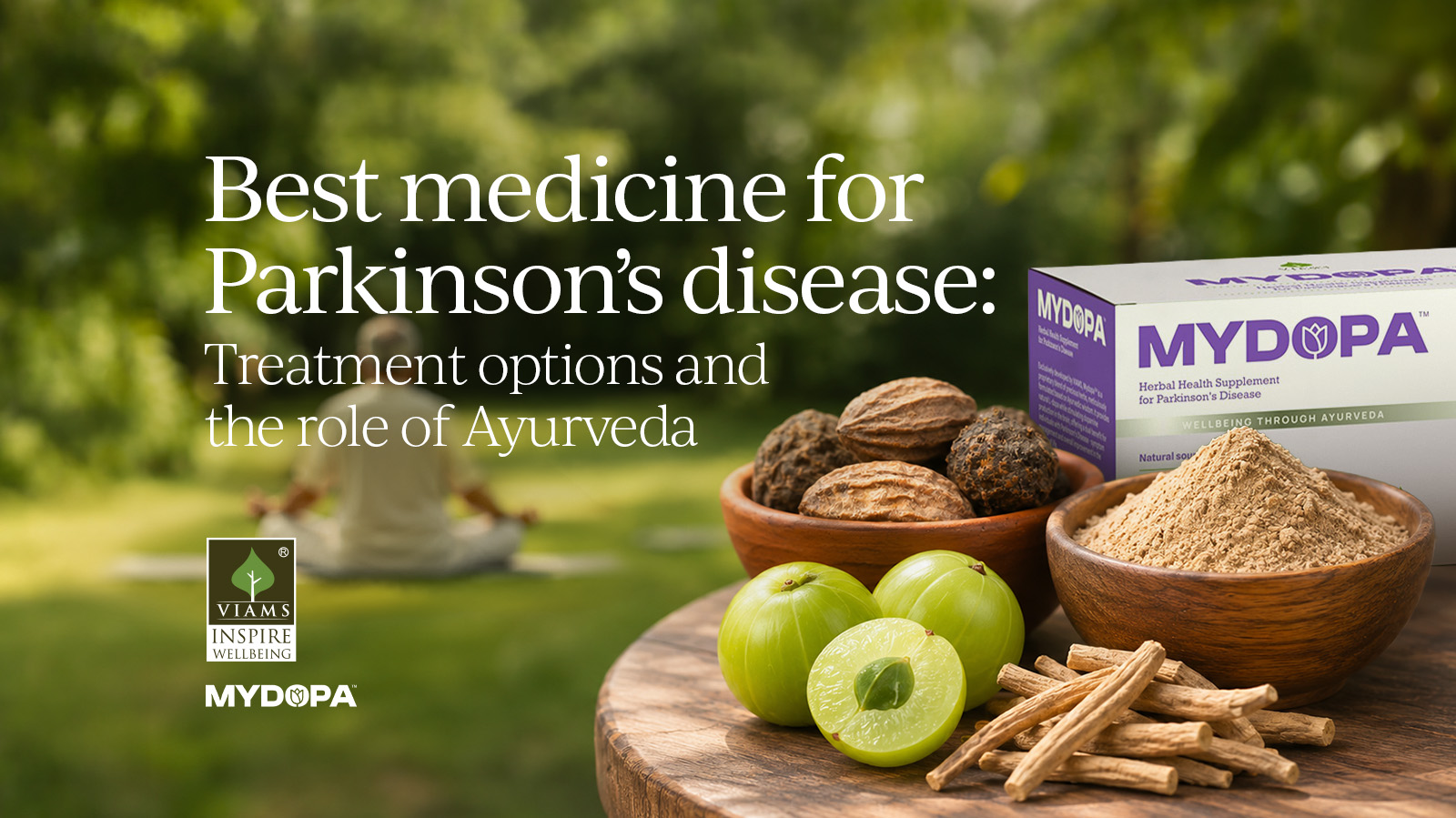
MYDOPA is an herbal formulation associated with Ayurveda-based Parkinson’s care. Its key botanical ingredient is Mucuna pruriens, traditionally known as Kapikachhu.
Mucuna pruriens naturally contains levodopa, also called L-DOPA, a precursor used by the body to produce dopamine. This makes the plant scientifically relevant to Parkinson’s disease research.
However, natural levodopa-containing preparations should not be assumed to have the same dose consistency, absorption, clinical effects or safety profile as standardised prescription medicines.
Parkinson’s disease affects several interconnected aspects of health. An integrated approach brings appropriate clinical assessment, individualised treatment and rehabilitation together within a coordinated care plan.
At VIAMS, this principle informs the institute’s Ayurveda-based neuro-rehabilitation approach.
The first step is to understand the patient’s diagnosis, symptoms, disease stage, medical history, current medicines and everyday difficulties.
The assessment should identify the patient’s priorities, whether these involve tremors, walking, stiffness, sleep, speech, swallowing or independence.
Ayurvedic medicines and therapeutic procedures are selected according to the patient’s needs and clinical suitability. Treatment should be reviewed periodically, with adjustments based on response and safety.
Physiotherapy can support mobility, posture, flexibility, balance and walking. Individualised exercises may also help patients maintain strength and confidence in movement.
Some patients experience softer speech, reduced clarity or difficulty swallowing. Assessment by an appropriately qualified speech and language therapist can help identify suitable communication strategies and swallowing support.
New or worsening swallowing difficulties require prompt medical assessment because they can increase the risk of complications.
Occupational therapy focuses on practical activities such as dressing, bathing, eating and moving safely around the home. Adaptations and task-specific strategies can help patients preserve independence.
Constipation, poor sleep, anxiety and changes in mood can significantly affect quality of life. Nutritional guidance, suitable activity, sleep routines and psychological support may help address these difficulties.
These elements work towards a common objective: helping each patient function as safely and independently as possible.
Integrated care is not simply the addition of several treatments. It requires coordination, regular assessment and decisions based on the patient’s changing needs.
A structured treatment pathway can help patients and families understand what happens next.
The clinician reviews symptoms, medical records, medicines, functional abilities and individual goals. An initial treatment plan is prepared according to the findings.
When indicated, the patient may benefit from a structured period of treatment and rehabilitation. Ayurvedic care, movement training, speech support, dietary guidance and other services are arranged according to clinical need.
After the initial programme, patients and caregivers need clear instructions for continuing care, safe daily activities, prescribed treatments and follow-up assessments. Progress should be reviewed rather than assumed.
Not every patient requires inpatient treatment. The appropriate setting and duration depend on the person’s clinical condition, functional needs and available support at home.
Fact: Parkinson’s disease varies considerably between patients. Treatment must be personalised and reviewed over time.
Fact: Ayurvedic clinical assessment considers individual symptoms, constitution, strength and other health factors. Treatment should be tailored accordingly.
Fact: Herbal formulations can have active pharmacological effects and may interact with other medicines. Quality, dosage, suitability and monitoring matter.
Fact: Appropriate exercise, physiotherapy and other rehabilitation services may be useful at different stages of Parkinson’s disease, depending on the patient’s needs.
Fact: Age alone should not determine whether treatment or rehabilitation is appropriate. Medical fitness, frailty, other illnesses and individual goals should guide decisions.
For families providing parent care, small, consistent steps can make a meaningful difference to everyday safety and wellbeing.
Families caring for parents with stroke or other neurological disorders should also seek condition-specific assessment rather than assuming that all movement difficulties have the same cause.
Caregivers are an essential part of long-term management, but they also need practical guidance and support. A clear treatment plan helps families understand what to monitor, when to seek help and how to support the patient without taking away their independence.
Dr. K. V. Vijayan Institute of Ayurveda Medical Science (VIAMS), located in Mezhathur, Palakkad, Kerala, has a long-standing Ayurvedic clinical tradition and a focused approach to Parkinson’s disease management.
The institute’s treatment model brings together individualised Ayurvedic care and rehabilitation services according to the patient’s needs. These may include physiotherapy, speech and swallowing support, dietary guidance, psychological support and structured follow-up.
The focus is on understanding how Parkinson’s disease affects the individual, establishing realistic treatment goals and reviewing progress over time.
Patients and families can seek guidance about assessment, treatment options, MYDOPA, rehabilitation requirements and the suitability of different care pathways. A consultation can help clarify the next steps based on the patient’s condition rather than relying on general advice or a one-size-fits-all prescription.
There is no single best medicine for everyone. Treatment depends on the patient’s symptoms, medical history, disease stage and individual goals. A personalised plan may include medicines, appropriate Ayurvedic care and rehabilitation.
Ayurveda offers its own diagnostic and therapeutic approaches that may help address selected symptoms and aspects of wellbeing. The degree of benefit varies, and treatment should be guided by a qualified clinician with appropriate monitoring.
MYDOPA is an herbal formulation associated with Parkinson’s care and contains Mucuna pruriens as a key botanical ingredient. Because this plant naturally contains levodopa, its composition, suitability, interactions and clinical evidence should be carefully evaluated before use.
Patients should not assume that MYDOPA can replace prescription medicines. Any proposed change requires an individual clinical assessment and professional guidance because levodopa-containing products can affect symptom control and interact with other treatments.
It may be suitable when planned around the patient’s health, mobility, frailty, medical conditions and goals. The care plan should be adapted to the individual and reviewed regularly.
There is currently no established treatment that reliably cures Parkinson’s disease. However, appropriate treatment and rehabilitation may help manage symptoms, preserve function and support quality of life. Outcomes vary between individuals.
Patients and caregivers can contact VIAMS to enquire about a clinical assessment, personalised Ayurvedic care and rehabilitation options. Sharing relevant medical records, current prescriptions and a summary of symptoms can help the treating team understand the patient’s needs.
Finding the best medicine for Parkinson’s disease requires looking beyond a single tablet or formulation. Every patient has a different combination of symptoms, health concerns, strengths and treatment goals.
Ayurveda provides a distinct clinical framework for assessing and treating patients, while an integrated care plan can bring together appropriate medicines, therapeutic procedures, rehabilitation, nutrition, psychological support and continuing review. MYDOPA, because of its Mucuna pruriens content, deserves careful consideration of its composition, clinical evidence, suitability and safety.
For patients and families, the most important step is to seek informed guidance and choose a treatment pathway that is individualised, measurable and responsive to changing needs.
At VIAMS, patients and caregivers can enquire about Parkinson’s assessment, Ayurveda-based treatment and integrated neuro-rehabilitation to understand which options may be appropriate for their circumstances.
Need expert guidance? Connect with VIAMS to get personalized support for your medical career journey.