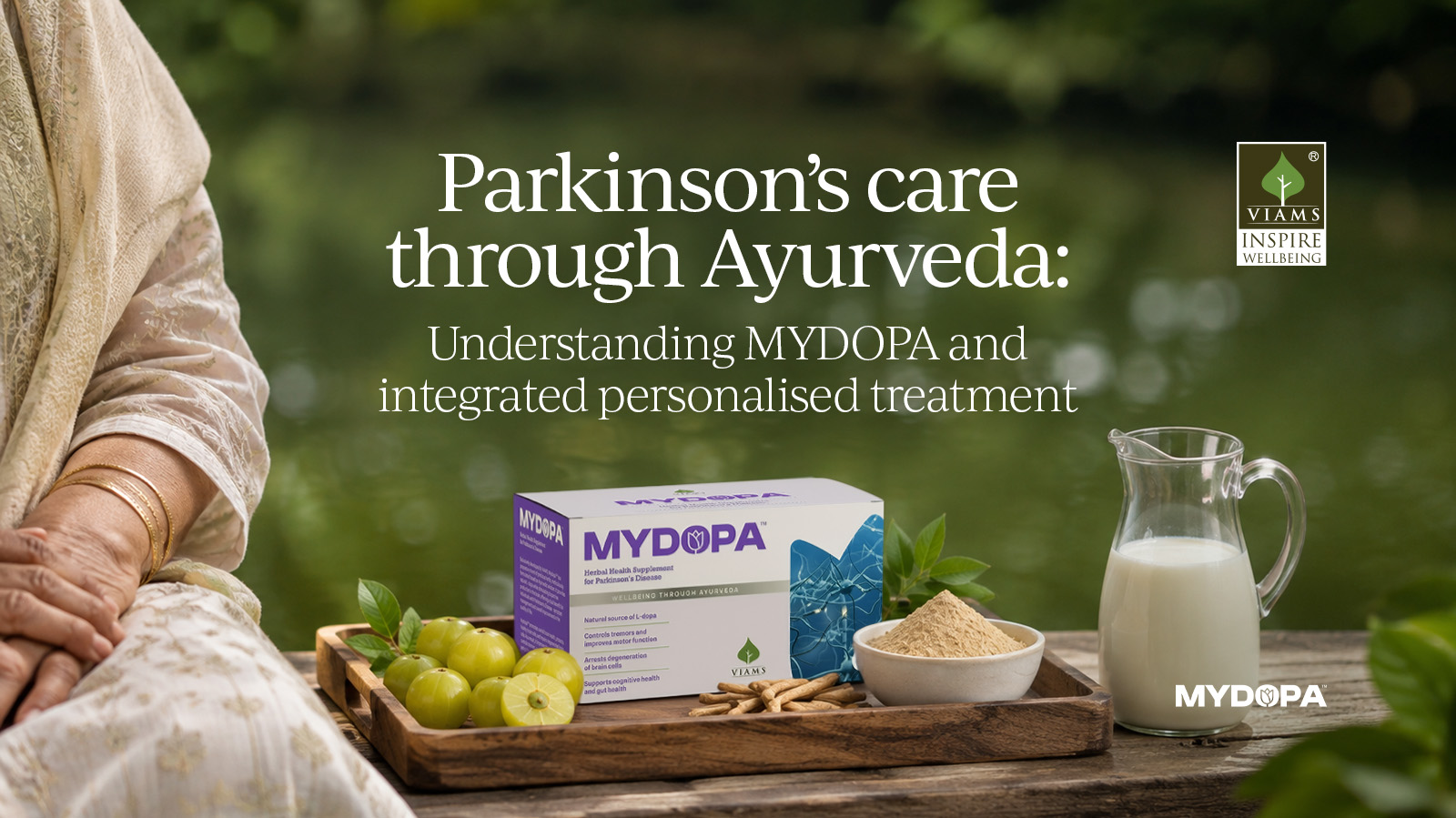
When someone develops Parkinson’s disease, the effects reach far beyond tremors. Walking may become slower, handwriting may change, sleep may become disturbed, and everyday activities such as dressing, eating or speaking may require increasing effort. For families, watching these changes in someone they love can be emotionally challenging.
Parkinson’s disease is a progressive neurological condition, but its effects are different for every person. While some individuals experience prominent tremors, others struggle more with stiffness, slowness of movement, balance, sleep, digestion or emotional wellbeing.
This is why Parkinson’s care needs more than a standard prescription or a general wellness programme. It requires careful assessment, individualised treatment, regular monitoring and sustained support for both patients and caregivers.
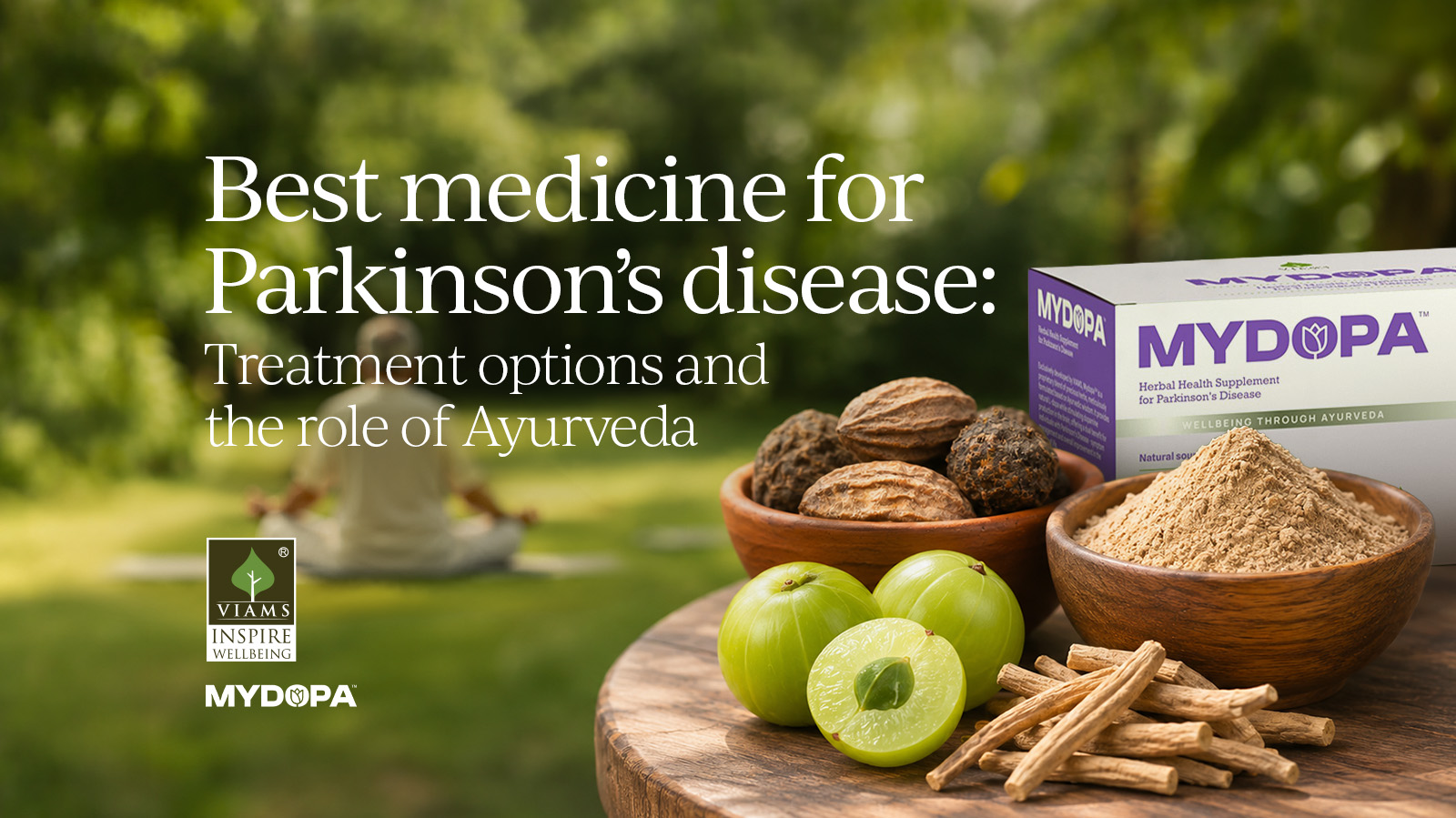
At the Dr. K. V. Vijayan Institute of Ayurveda Medical Science (VIAMS), Mezhathur, Kerala, Parkinson’s care is approached through specialised Ayurvedic treatment and an integrated neuro-rehabilitation programme. MYDOPA, a herbal formulation developed by VIAMS, is one component of this approach.
Understanding how Ayurveda, MYDOPA and Personalised rehabilitation fit into a patient’s care journey can help families make informed decisions about the next steps.
Parkinson’s disease is a neurodegenerative condition associated with the loss or dysfunction of dopamine-producing nerve cells in the brain. Dopamine is an important chemical messenger involved in coordinating movement.
As the disease progresses, patients may experience:
Not everyone develops the same symptoms or experiences them at the same rate. Treatment therefore needs to reflect the patient’s symptoms, functional abilities, general health, personal priorities and stage of disease.
Early assessment and appropriate ongoing care can help patients maintain function, independence and quality of life for as long as possible.
Ayurveda describes several disorders involving abnormal movement, stiffness and functional impairment under the broader framework of Vata-related conditions. Kampavata is an Ayurvedic condition commonly discussed in relation to the clinical presentation of Parkinson’s disease.
An Ayurvedic physician evaluates the person as a whole, considering symptoms, strength, digestion, sleep, bowel habits, general health, disease history and individual constitution. This assessment informs the selection of medicines, therapies, dietary guidance and lifestyle measures.
Depending on the patient’s clinical condition, an Ayurvedic treatment plan may include:
Individualised Ayurvedic medicines and supportive measures are selected according to the patient’s presentation and treatment requirements.
Appropriate Panchakarma procedures may be considered following a detailed assessment. These treatments must be selected carefully, particularly for older adults, people with frailty, swallowing difficulties or other significant medical conditions.
Where clinically appropriate, restorative approaches may be used to support general wellbeing, strength, nutrition and daily functioning.
These stages are not a fixed prescription for every patient. Their suitability, sequence and duration depend on the physician’s assessment.
Ayurveda offers its own diagnostic framework and therapeutic principles. At the same time, Parkinson’s symptoms can overlap with other neurological conditions, so accurate clinical evaluation and appropriate investigations remain important. Treatment outcomes should be assessed individually rather than assumed.
Bridging Ayurvedic wisdom, botanical science and integrative neurological care
Parkinson’s disease is a progressive neurological disorder that affects movement and can also influence sleep, speech, mood, cognition, bowel function and everyday independence. As the condition progresses, patients and families often need more than a single intervention. They need a coordinated approach that considers symptoms, physical function, nutrition, rehabilitation, emotional wellbeing and quality of life.
MYDOPA is an herbal formulation developed by Dr. K. V. Vijayan Institute of Ayurveda Medical Science (VIAMS), Kerala, India, to support people living with Parkinson’s disease. Its formulation brings together Mucuna pruriens, Withania somnifera and the three fruits that constitute Triphala, using a traditional Ayurvedic processing approach involving cow’s milk.
The concept behind MYDOPA is to combine a botanical source of naturally occurring L-DOPA with complementary Ayurvedic ingredients in a convenient, measured-dose formulation. It represents an effort to translate traditional herbal knowledge and clinical experience into a product that can be evaluated through contemporary quality testing and scientific research.
MYDOPA is presented as a supportive component of Parkinson’s disease management, not as a proven cure or a substitute for prescribed neurological treatment.
MYDOPA is a proprietary herbal formulation developed by VIAMS for supportive care in Parkinson’s disease. Each 1.5-gram sachet contains five principal botanical ingredients, processed with cow’s milk.
The formulation is designed around three complementary concepts:
MYDOPA is available in granule sachets intended for convenient oral administration. The product developed as the result of more than a decade of research and formulation work.
The scientific significance of MYDOPA lies in its particular combination of ingredients and processing approach.
The uniqueness of MYDOPA can be understood through its formulation, its botanical source of L-DOPA, its anti-oxidant property to slow down the progression, its inclusion of Triphala for enhanced GUT health, its milk-processing approach and its development within an Ayurvedic clinical setting.
Mucuna pruriens is the principal L-DOPA-containing botanical in MYDOPA. L-DOPA is a precursor of dopamine, a neurotransmitter involved in the regulation of movement.
In Parkinson’s disease, the progressive loss of dopamine-producing neurons contributes to characteristic motor symptoms. L-DOPA-based treatment is an established approach to improving these symptoms.
MYDOPA uses Mucuna pruriens as a natural botanical source of L-DOPA rather than relying on an isolated synthetic ingredient as the sole active component of the formulation.
MYDOPA combines Mucuna pruriens with Ashwagandha and the three components of Triphala.
This is a defining formulation feature: the product is not simply presented as powdered Mucuna pruriens, but as a combination of botanicals selected within an Ayurvedic framework.
The proposed rationale is that the ingredients may contribute different phytochemical properties. They will act synergistically.
The product documentation identifies cow’s milk as part of the preparation process.
Milk processing is an important aspect of the formulation’s traditional manufacturing identity. The specific effect of this processing on L-DOPA stability, extraction, absorption or tolerability would need to be demonstrated through comparative analytical studies. The fat molecules in the milk will help to break the blood brain barrier to reach the brain.
Each sachet is labelled as containing 1.5 grams of formulation. This format provides a defined quantity of product per serving and is intended to make administration convenient.
A measured product dose does not, by itself, establish an exact pharmacological dose. The actual L-DOPA content must be determined analytically and maintained within an appropriate specification across manufacturing batches.
MYDOPA’s supporting documentation includes laboratory reports addressing L-DOPA content, selected contaminants, microbial quality and an in-vitro antioxidant assay.
This combination of traditional formulation principles and modern analytical evaluation is an important part of its development story.
| Ayurvedic name | Scientific name | Listed quantity |
| Kapikacchu | Mucuna pruriens | 300 mg |
| Ashwagandha | Withania somnifera | 300 mg |
| Haritaki | Terminalia chebula | 300 mg |
| Bibhitaki | Terminalia bellirica | 300 mg |
| Amalaki | Emblica officinalis | 300 mg |
| Cow’s milk | Processing ingredient | Quantity sufficient |
<escape>Primary formulation role: Natural source of L-DOPA.</escape>
Mucuna pruriens is a leguminous plant used in traditional Ayurvedic practice. Its seeds naturally contain L-DOPA, making it relevant to research on dopaminergic function and Parkinson’s disease.
L-DOPA can cross the blood–brain barrier and be converted into dopamine in the brain. This is the basis of its established pharmacological relevance to Parkinson’s disease.
The botanical matrix of Mucuna pruriens also contains other constituents.
For MYDOPA, the key scientific questions include the consistency of L-DOPA content, its bioavailability, the influence of processing and its clinical effects at the administered dose.
Ashwagandha is an established Ayurvedic botanical traditionally associated with strength, resilience and restorative care.
Modern research has investigated several pharmacological properties of Withania somnifera, including possible effects on stress-related pathways and aspects of neurological health.
Within MYDOPA, Ashwagandha forms part of the broader herbal combination.
Haritaki is one of the three fruits of Triphala and has a longstanding place in Ayurvedic practice, particularly in formulations associated with digestion and bowel function.
Constipation is a common non-motor symptom in Parkinson’s disease. This makes digestive health a clinically relevant consideration when planning comprehensive care.
Bibhitaki is the second fruit in Triphala. It contains a variety of plant constituents, including polyphenolic compounds that have been investigated for biological activities.
Its role in MYDOPA is consistent with the formulation’s use of a multi-ingredient Ayurvedic approach.
Amalaki, commonly known as Indian gooseberry or Amla, is the third fruit in Triphala. It is recognised in Ayurveda and has been investigated for its phytochemical and antioxidant properties.
The inclusion of Amalaki contributes to the formulation’s botanical profile.
Cow’s milk is identified in the technical documentation as a processing ingredient.
Allergy and tolerability: People with lactose intolerance should also seek professional advice about the formulation and its processing.
The development rationale begins with an important clinical observation: Parkinson’s disease is complex, and its management often requires several coordinated interventions over time.
Conventional levodopa-based medicines have a well-established role in symptom management. At the same time, patients may experience changes in symptom control, fluctuations in movement(diskinesias) and other treatment-related complications as the disease progresses.
These challenges have encouraged researchers to investigate botanical sources of L-DOPA and complementary approaches to neurological care.
MYDOPA was developed to explore a particular approach: combining Mucuna pruriens with selected Ayurvedic botanicals in a formulation designed for supportive use within Parkinson’s disease management.
Its intended rationale can be summarised in three parts:
The important distinction is between the rationale for developing a product and proof that the product improves clinical outcomes. MYDOPA’s formulation provides a basis for scientific investigation; the magnitude and durability of its benefits is already established.
A reasonable question is why a formulation should contain several ingredients when Mucuna pruriens itself is a source of L-DOPA.
The answer lies in the formulation concept, not in a claim of proven superiority.
MYDOPA brings together a principal L-DOPA-containing botanical and four additional formulation components, including aswagandha & three Triphala fruits.
The intended rationale is to create a preparation informed by Ayurvedic formulation principles rather than using Mucuna pruriens alone.
The sachet format provides a measured quantity of the finished formulation. This is useful for product handling and administration, provided manufacturing specifications and batch-to-batch consistency are maintained.
The use of cow’s milk is a specified feature of the formulation. Its effect on the product’s chemistry and performance remains an appropriate subject for analytical research.
The novelty of MYDOPA can be explained through its formulation architecture and the questions that inspired its development.
The importance of dopamine in Parkinson’s disease provided a scientific rationale for investigating Mucuna pruriens, a botanical source of L-DOPA.
Rather than focusing exclusively on Mucuna pruriens, MYDOPA combines it with Ashwagandha, Haritaki, Bibhitaki and Amalaki.
The formulation therefore brings together a botanical source of L-DOPA and a group of herbs traditionally used in Ayurveda for neuro protection and GUT health enhancement.
The technical documentation identifies cow’s milk as a component of preparation. This distinguishes the specified formulation from an unprocessed single-herb powder, and the fat molecules will help to break the blood-brain-barrier.
The finished product is presented in 1.5-gram granule sachets. This provides a defined unit of administration and creates an opportunity for batch-specific analytical standardisation.
MYDOPA can reasonably be described as a distinctive multi-ingredient Herbal formulation developed for supportive Parkinson’s disease care.
The CARE KERALAM test report, records an L-DOPA content of 4.04% for batch 1172.
This is an important analytical result because L-DOPA is central to the formulation’s scientific rationale.
The same report lists the following findings for the tested sample:
These findings support a limited statement about the tested batch and the specific parameters examined.
A separate report for the same sample reference records the following results:
These results are relevant to quality assessment of the tested sample.
The supplied DPPH assay document describes an in-vitro free-radical scavenging test and reports an estimated IC₅₀ of approximately 25 µg/mL for the tested MYDOPA sample. <FileCite ref_id=”turn0file2″ />
The reported result suggests antioxidant activity under the experimental conditions used.
It demonstrate that MYDOPA protects dopamine-producing neurons in humans, slows Parkinson’s disease progression and improves motor function.
The documents provide preliminary product-characterisation information for a specific batch, including L-DOPA content, selected contaminant results, microbial findings and an in-vitro antioxidant result.
One of the important questions surrounding a botanical L-DOPA formulation is whether it can be used without carbidopa.
Carbidopa is commonly combined with prescribed levodopa because it inhibits peripheral aromatic L-amino acid decarboxylase. This reduces the conversion of levodopa to dopamine outside the brain and allows more levodopa to reach the central nervous system.
MYDOPA is described in its technical documentation as a multi-ingredient botanical formulation rather than a conventional levodopa-carbidopa tablet.
However, the absence of synthetic carbidopa does not establish that a formulation does not need its pharmacological function.
Claims that Mucuna pruriens naturally provides sufficient enzyme inhibition, that MYDOPA achieves equivalent central levodopa availability or that it reduces dyskinesia risk require direct supporting evidence.
Similarly, MYDOPA should not be presented as a replacement for prescribed levodopa-carbidopa medicines. Changes to Parkinson’s medication can lead to serious deterioration in symptom control and should only be made under the supervision of the treating clinician.
Parkinson’s disease management extends beyond medication or supplementation. A comprehensive care plan may include physiotherapy, occupational therapy, speech and swallowing assessment, exercise adapted to individual ability, nutritional support, psychological care and strategies for managing non-motor symptoms.
The integrative care approach associated with VIAMS places MYDOPA within a broader clinical context in which individual needs and functional goals can be assessed.
The distinction between the product and the care programme is important. Benefits observed during a programme involving several interventions cannot automatically be attributed to MYDOPA alone.
Where patients receive MYDOPA alongside rehabilitation or other treatments, clinical documentation should record the different interventions and use appropriate outcome measures to assess their individual and combined contributions.
A research programme could assess outcomes such as motor symptoms, activities of daily living, gait, sleep, bowel function and quality of life, using validated instruments and a predefined follow-up schedule.
MYDOPA is intended to support people seeking information about Ayurvedic approaches to Parkinson’s disease management. Whether it is appropriate for an individual depends on their diagnosis, current medicines, medical history and clinical circumstances.
Particular care is needed for people who:
Because MYDOPA contains naturally occurring L-DOPA, potential interactions and additive dopaminergic effects require attention. A product being herbal does not eliminate the possibility of adverse effects or interactions.
The technical data sheet instructs users to dissolve one sachet in approximately 90 mL of lukewarm water, stir thoroughly and consume immediately.
It also advises storing the product in a cool, dry place, away from direct sunlight and moisture. <FileCite ref_id=”turn0file3″ />
The product’s appropriate dose and frequency should be confirmed against the current authorised product labelling and individual clinical advice. The one-sachet preparation instruction should not be interpreted as a universal dosing recommendation for every person with Parkinson’s disease.
The development of MYDOPA illustrates an important opportunity for Ayurveda: translating traditional botanical formulations into products that can be characterised, standardised and evaluated using contemporary research methods.
Its formulation concept combines a botanical source of L-DOPA with Ashwagandha and Triphala in a measured-dose preparation. Its supporting documentation includes analytical testing of a specific batch and an in-vitro antioxidant assessment.
The next step is to connect these findings to reproducible manufacturing standards and reliable clinical outcomes.
For patients and clinicians, that means distinguishing between traditional rationale, laboratory evidence, patient experience and demonstrated treatment effects. For researchers, it means investigating the complete formulation rather than assuming that the properties of individual ingredients establish the efficacy of the finished product.
MYDOPA represents a distinctive Herbal formulation developed to support research and clinical discussion around Parkinson’s disease care.
Its defining features are the combination of Mucuna pruriens, Ashwagandha and the three fruits of Triphala; processing with cow’s milk; a measured-dose granule format; and the availability of laboratory reports characterising a tested batch.
These features provide a clear foundation for explaining what MYDOPA is and why it was developed. They also identify the questions that must be answered before stronger claims can be made about clinical efficacy, neuroprotection or disease progression.
The responsible way forward is to integrate traditional knowledge with rigorous analytical testing, carefully designed clinical studies and appropriate medical supervision.
MYDOPA’s long-term value will depend not only on the distinctiveness of its formulation, but on the quality, reproducibility and transparency of the evidence demonstrating what it can—and cannot—achieve for people living with Parkinson’s disease.
Parkinson’s disease can affect movement, communication, sleep, nutrition, emotional health and independence. Addressing only one symptom may leave other important needs unmet.
An integrated programme brings relevant disciplines together around the patient’s individual goals. At VIAMS, the published care model includes Ayurveda, selected Panchakarma therapies and neuro-rehabilitation services.
The physician evaluates symptoms, disease history, strength, general health and daily functioning to develop an individualised treatment plan.
Appropriately designed exercises can help address mobility, posture, flexibility, balance and walking difficulties. Exercise programmes should reflect the patient’s abilities and fall risk.
Speech-language professionals can assess changes in voice, speech clarity and swallowing. Early assessment is particularly important when coughing during meals, choking or unexplained weight loss occurs.
Practical strategies can help patients manage dressing, bathing, eating, writing and other daily activities more safely.
A suitable dietary plan can help address constipation, hydration, adequate nutrition and other individual needs. People taking levodopa-containing medicines may need personalised advice about meal timing and protein intake.
Anxiety, low mood, sleep problems and the emotional demands of caregiving deserve attention. Supporting the caregiver is also an important part of sustainable long-term care.
The goal is to coordinate appropriate care around the person, not to apply every available treatment to every patient.
For adult children caring for ageing parents, Parkinson’s disease often brings difficult questions: How can we keep our parent independent? When should we seek additional help? What if walking or swallowing becomes more difficult?
A few practical steps can make a meaningful difference.
Keep a record of changes in tremors, walking, sleep, bowel habits, speech, falls and daily activities. Share these observations during consultations.
Improve lighting, remove loose rugs and clutter, install appropriate bathroom support and ensure frequently used items are easy to reach. Seek professional advice if falls or freezing of gait are concerns.
Regular meals, adequate hydration, prescribed medicines at the recommended times, suitable physical activity and a structured sleep routine can support daily functioning.
Do not start herbal supplements, change medicines or undertake intensive therapies solely on the basis of testimonials or social media claims.
Repeated falls, worsening mobility, new confusion, significant swallowing difficulties or sudden neurological changes require prompt medical assessment. Sudden weakness, facial drooping or difficulty speaking may indicate a stroke and require emergency care.
Families caring for parents with stroke, Parkinson’s disease or other neurological conditions should remember that these conditions are different and require condition-specific assessment and rehabilitation.
Reality: Parkinson’s can affect movement, sleep, digestion, mood, speech and other functions. Some patients have little or no prominent tremor.
Reality: Symptoms, general health, disease stage and treatment priorities vary. Personalised assessment is essential.
Reality: Herbal products can contain pharmacologically active substances and may interact with medicines.
Reality: Patients should never stop or change prescribed medicines without the appropriate prescribing clinician’s guidance. Any treatment changes require careful assessment and monitoring.
Reality: Although Parkinson’s is currently not curable, appropriate medical management, rehabilitation, symptom support and individualised care can help many patients maintain function and quality of life.
Ayurveda offers a distinct system of clinical assessment and treatment that may help address selected symptoms and individual care needs. The benefits and limitations of particular interventions should be discussed with a qualified physician, and claims of disease reversal or cure require strong clinical evidence.
MYDOPA is a herbal health supplement developed by VIAMS. Its published product information identifies Mucuna pruriens as an ingredient and reports naturally occurring L-DOPA. Its suitability should be assessed by a qualified treating physician, particularly for patients taking Parkinson’s medicines.
Patients should not assume that MYDOPA is equivalent to prescription levodopa or use it as a substitute. The formulation, dose consistency, clinical evidence and potential interactions must be evaluated. Any changes to prescribed treatment require medical supervision.
VIAMS describes an approach combining individualised Ayurvedic treatment with appropriate rehabilitation services, including physiotherapy, speech and swallowing support, psychological care, yoga and nutritional guidance. The programme is tailored to the patient’s needs.
Yes, It is appropriate for selected patients following a thorough assessment. Age, frailty, other illnesses, swallowing difficulties, current medicines and fall risk must be considered before selecting medicines or therapies.
VIAMS publishes information about online and in-person consultations. Families can contact the institute to ask about appointment availability, the medical records required and whether remote assessment is suitable for their parent’s condition.
Seek an assessment when tremors, stiffness, slowness, walking difficulties or other persistent symptoms interfere with daily life. Worsening swallowing, repeated falls or sudden neurological changes require prompt attention, with emergency evaluation for possible stroke symptoms.
Parkinson’s disease affects each person differently. Effective care requires a clear understanding of the patient’s condition, realistic treatment goals, careful monitoring and support for the family throughout the journey.
Ayurveda provides a traditional medical framework for individualised assessment and treatment. MYDOPA is one formulation developed by VIAMS, while the institute’s broader care model includes rehabilitation and other supportive services tailored to individual needs.
No single formulation or treatment approach can guarantee recovery or prevent disease progression. However, a carefully planned care programme can help address symptoms, support everyday functioning and guide families through the challenges of long-term neurological care.
At the Dr. K. V. Vijayan Institute of Ayurveda Medical Science (VIAMS), Mezhathur, Kerala, patients and families can enquire about personalised Parkinson’s assessment, Ayurvedic treatment and neuro-rehabilitation options.
Need expert guidance? Contact VIAMS to discuss your parent’s symptoms, understand the available care options and determine an appropriate next step. The team can guide you on arranging a consultation and preparing relevant medical records.
Need expert guidance? Connect with VIAMS to get personalized support for your medical career journey.