Every heartbeat sustains life, but every thought, memory, movement, emotion, decision, and dream begins in one remarkable organ—the brain.
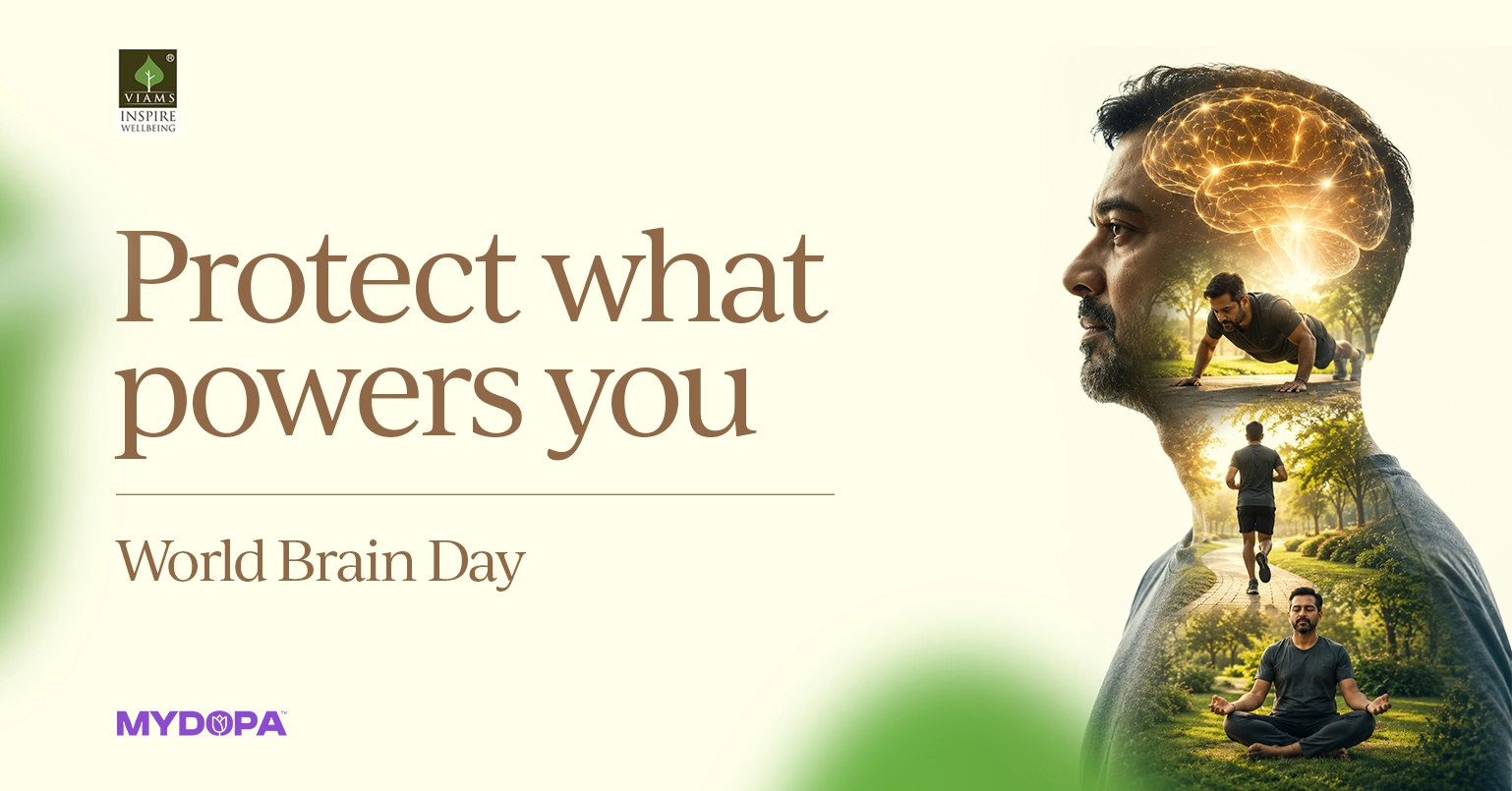
On World Brain Day (July 22), the global healthcare community comes together to raise awareness about brain health, neurological disorders, early diagnosis, prevention, and rehabilitation. As life expectancy increases across the world, maintaining brain health is no longer merely a medical concern; it has become one of the greatest public health priorities of our generation.
At VIAMS, where neurological disorders have been our core area of clinical practice for decades, we believe that protecting the brain means protecting independence, dignity, productivity, and quality of life.
Your brain works every second of every day—even while you sleep. It controls nearly every function of your body, often without you realizing it. Investing in brain health today is an investment in the future you wish to live.
Neurological disorders are among the leading causes of disability and death worldwide. Conditions such as Parkinson’s disease, Alzheimer’s disease, stroke, epilepsy, multiple sclerosis, migraine, neuropathies, movement disorders, and various neurodegenerative illnesses are
increasing steadily due to ageing populations, sedentary lifestyles, chronic stress, metabolic disorders, environmental factors, and longer life expectancy.
What makes many neurological diseases particularly challenging is that they often develop gradually. The earliest warning signs—slight tremors, changes in handwriting, memory lapses, slowed movements, poor sleep, altered balance, loss of smell, or persistent headaches—may be dismissed as normal ageing until they begin affecting daily life.
Fortunately, many neurological conditions can be better managed when recognised early and addressed through comprehensive medical care, rehabilitation, nutrition, and lifestyle interventions.
The human brain weighs only about 1.3–1.4 kilograms, yet it consumes nearly 20% of the body’s energy. It contains approximately 86 billion neurons communicating through trillions of neural connections every moment.
From your first breath to your final day, the brain remains continuously active—processing information, regulating hormones, coordinating movement, controlling emotions, storing memories, adapting to experiences, and learning new skills.
Its extraordinary ability to reorganise itself, known as neuroplasticity, means that even after injury or disease, the brain often retains the capacity to learn, adapt, and recover when supported by appropriate rehabilitation and healthy lifestyle practices.
This remarkable resilience is one of the greatest reasons for hope in neurological medicine.
Many people believe brain health becomes important only after memory loss or neurological illness develops. In reality, brain health is built every single day through our choices.
Regular physical activity improves blood circulation to the brain, stimulates the production of growth factors that support neurons, and reduces the risk of stroke and neurodegenerative diseases. Nutritious food rich in antioxidants, healthy fats, vitamins, minerals, and plant-based
phytonutrients provides the fuel required for optimal brain function.
Quality sleep allows the brain to consolidate memories, repair neural pathways, and remove metabolic waste products that accumulate throughout the day. Chronic sleep deprivation has been linked to impaired cognition, mood disorders, and increased risk of dementia.
Mental stimulation through reading, learning new skills, solving problems, engaging in meaningful conversations, and maintaining curiosity strengthens cognitive reserve, helping the brain remain resilient with age.
Equally important is emotional wellbeing. Chronic stress elevates cortisol levels, which may negatively affect memory, concentration, and overall brain health. Mindfulness practices, meditation, yoga, social connections, and purposeful living all contribute to long-term
neurological wellbeing.
Ayurveda has recognised the importance of preserving cognitive function for thousands of years. The classical texts describe the concepts of Medha (intellect), Smriti (memory), Manas (mind),and Ojas (vital essence), emphasizing that optimal brain function depends upon harmony
between body, mind, and consciousness.
Neurological disorders are not viewed merely as isolated diseases but as disturbances affecting multiple physiological systems, particularly involving the nervous system, metabolism, digestion, circulation, and mental wellbeing.
Ayurveda therefore adopts a comprehensive approach that includes personalised medicines, Panchakarma therapies where appropriate, dietary modifications, Rasayana (rejuvenation), yoga, meditation, lifestyle regulation, and behavioural practices aimed at supporting long-term neurological health.
Rather than focusing solely on symptoms, the objective is to enhance functional capacity, improve quality of life, support healthy ageing, and promote overall wellbeing.
For over five decades, VIAMS has been committed to advancing Ayurvedic neurological care. Building upon this legacy, our dedicated neuro-rehabilitation programme integrates classical Ayurveda with modern rehabilitation sciences.
Patients receive individualised care through a multidisciplinary team involving Ayurvedic physicians, physiotherapists, occupational therapists, speech and swallowing therapists, psychologists, dietitians, yoga therapists, and specialised nursing support.
This integrated approach is particularly valuable in conditions such as Parkinson’s disease, stroke rehabilitation, cerebellar disorders, neuropathies, spinal disorders, movement disorders, and age- related neurological decline, where preserving function and independence are as important as managing disease progression.
Our philosophy remains simple: every patient deserves comprehensive, compassionate, evidence-informed care that addresses the person—not merely the diagnosis.
The most powerful neurological medicine often begins with everyday habits. Choosing regular exercise over inactivity, nourishing food over processed diets, restorative sleep over chronic exhaustion, lifelong learning over mental stagnation, meaningful relationships over isolation, and stress management over constant pressure collectively create a healthier brain throughout life.
Brain health is not built overnight. It is cultivated consistently through thousands of small choices that accumulate over the years.
Every healthy decision strengthens the foundation upon which memory, movement, emotional wellbeing, and independence depend.
Advances in neuroscience continue to transform our understanding of the brain. From neuroimaging and biomarkers to rehabilitation technologies and regenerative medicine, the future offers tremendous promise.
Alongside these innovations, traditional systems such as Ayurveda continue to contribute valuable perspectives on preventive healthcare, healthy ageing, personalised medicine, and holistic rehabilitation.
The future of neurological care will increasingly depend upon thoughtful integration of evidence- based traditional knowledge with contemporary medical science, always placing patient outcomes at the centre of care.
On this World Brain Day, let us remember that the brain is not simply another organ—it is the very essence of who we are. It shapes our identity, relationships, creativity, memories, emotions, and ability to experience life itself.
Protecting brain health is not a responsibility reserved for neurologists or hospitals. It begins with each one of us, every single day. Think well. Live well. Keep learning. Stay positive. Because when we protect our brain, we protect our future.
This World Brain Day, make one promise to yourself: care for the organ that has cared for you since the day you were born.
If you or your loved one experiences tremors, memory problems, slowed movements, poor balance, recurrent headaches, numbness, difficulty walking, speech changes, or any neurological symptoms, early evaluation can make a meaningful difference.
VIAMS offers comprehensive Integrated Neurological Care combining Ayurveda with multidisciplinary rehabilitation for improved quality of life.
World Brain Day is observed annually on July 22 to promote awareness about brain health, neurological diseases, prevention, early diagnosis, and rehabilitation.
A healthy brain is essential for movement, memory, learning, emotions, communication, and maintaining independence throughout life.
Yes. Regular exercise, balanced nutrition, quality sleep, stress management, lifelong learning, and social engagement all contribute to healthier brain function.
Ayurveda emphasizes personalised care through diet, lifestyle, herbal medicines, rejuvenation therapies, yoga, meditation, and, where appropriate, Panchakarma to support cognitive and neurological wellbeing.
Persistent tremors, memory decline, balance problems, weakness, numbness, speech changes, recurrent headaches, seizures, or difficulty walking should be evaluated promptly, as early intervention often improves outcomes.